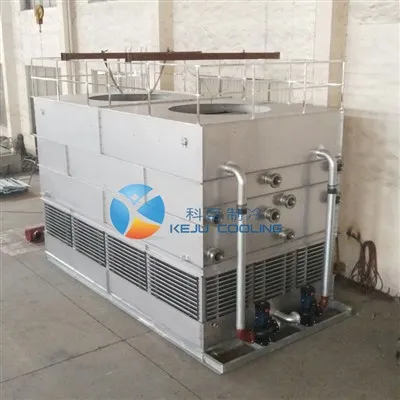
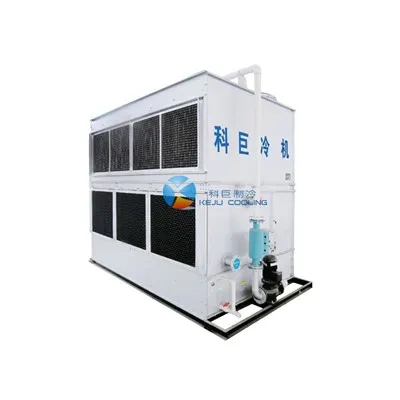
Counter Flow Closed Circuit Cooling Tower
Counter flow closed circuit cooling tower is a type of closed cooling tower where water flows downward through the fill media while air flows upward, in opposite directions.
- Fast Delievery
- Quality Assurance
- 24/7 Customer Service
Product Introduction
Wuxi Keju Machinery Manufacturing Co., Ltd
Wuxi Keju Machinery Manufacturing Co., Ltd. is a high-tech enterprise in Jiangsu Province and is professionally engaged in cooling system development, design, manufacturing, sales, and service. And has 10+ years of experience in the cooling system field. To meet the needs of modern industry development, our closed cooling tower tested in practice has been widely used in automobiles, planes, ships, electric power, chemical industry, food, medical treatment, central air conditioning, forging, casting, heat treatment, experiment platform, and other industries.
Why Choose Us
Years of Experience
Wuxi Keju Machinery Manufacturing Co., Ltd. is a high-tech enterprise in Jiangsu Province and is professionally engaged in cooling system development, design, manufacturing, sales, and service. And has 10+ years of experience in the cooling system field.
Quality System Certification
The company has passed 1OS9001-2008 Quality Management System Certification and worked out Q/320211JDM01-2013 Enterprise Standards. The company was also rated excellent management enterprise of the heat treatment industry in China, third-level enterprise of work safety standardization (machinery) in Wuxi City, cleaner production enterprise in Wuxi City and advanced energy conservation and emission reduction enterprise, and so on.
Professional Technical Team
After more than 10 years of continuous development and growth, the company now has formed a technical personnel team with complete and very high professional level and a production team with strong implementation force.
Excellent Services
The company can complete tasks with high quality and high efficiency, provide users with the best possible services, and also provide on-site training services, enabling operators to master the knowledge and experience necessary for operation, maintenance, and repair.

Cross Flow Closed Circuit Cooling Tower
KEJU cross flow closed circuit cooling tower is suitable for various kinds of cooling systems with high-quality requirements of circulation water, widely used in automobile, plane, ship, electric power, chemical industry, food, medical treatment, central air conditioning, forging, casting, heat treatment, experiment platform, and other industries.

Cross Flow Closed Cooling Tower
KEJU cross flow closed cooling tower is suitable for various kinds of cooling systems with high-quality requirements of circulation water, widely used in automobile, plane, ship, electric power, chemical industry, food, medical treatment, central air conditioning, forging, casting, heat treatment, experiment platform, and other industries.

Cross Flow Closed Type Cooling Tower
This type of closed circuit cooling tower uses a cross-flow design that enables the water to flow in a perpendicular direction to the airflow. This design ensures that the water is evenly distributed across the heat exchange surfaces, leading to efficient cooling performance.

Closed Type Crossflow Cooling Tower
KEJU closed type crossflow cooling tower utilizes the technology of combining coils and PVC fillers for mixed flow secondary heat exchange in the same direction of wind and water, achieving efficient heat exchange.

Cross Flow Closed Loop Cooling Tower
KEJU cross flow closed loop cooling tower is a system used for cooling purposes in various industries and buildings. It is designed to transfer heat from a building or process to the atmosphere, thus maintaining an optimal temperature.

Closed Circuit Cross Flow Cooling Tower
KEJU closed circuit cross flow cooling tower is an advanced cooling system that efficiently removes heat from machinery or other processes in a closed loop system. This type of closed cooling tower is highly efficient and reliable, with a low risk of contamination and minimal water consumption.

Cross Flow Closed Water Cooling Tower
KEJU cross flow closed water cooling tower can work in series as a group for larger capacities. The housing is made of special alloy coated steel or stainless steel, the heat exchange coil is made of stainless steel or copper, and the wet deck filler is made of PVC.

Induced Draft Cross Flow Closed Cooling Tower
In this cooling tower, the warm fluid that needs to be cooled is pumped into the tower and then runs through a heat exchanger where it exchanges heat with the coolant. The heat from the fluid is then transferred to the air through the heat exchanger, and the cooled fluid is then pumped back to the process.

Cross Flow Natural Draft Closed Cooling Tower
KEJU cross flow natural draft closed cooling tower is a modern and advanced technology used in the cooling of industrial equipment and processes. This cooling tower works on the principle of natural draft, which eliminates the need for mechanical fans and reduces operational costs.
What is Counter Flow Closed Circuit Cooling Tower
Counter flow closed circuit cooling tower is a type of closed cooling tower where water flows downward through the fill media while air flows upward, in opposite directions. The counterflow tower requires approximately 20% less fill volume compared to crossflow towers, leading to more efficient heat exchange and higher cooling efficiency.
Benefits of Counter Flow Closed Circuit Cooling Tower
Compact structure
Compared with other models, packing is generally not used inside the countercurrent closed tower, which makes the structure more compact, reduces the floor area and meets the space needs of users.
High efficiency
Four sides of the bottom air inlet, uniform air volume distribution, less heat dissipation blind area and high heat exchange efficiency; There is a large height difference between the air inlet and the air outlet, and the inlet and outlet air is not easy to short flow, which can ensure that the wet bulb temperature of the inhaled air is relatively low.
Energy saving
Counter flow closed circuit cooling tower can be controlled according to the temperature of the number of fans to start, and the opening and closing of the spray pump, you can also install a regulator valve to control the flow.
Environmental protection
Counter flow closed circuit cooling tower through the fully enclosed internal circuit circulating water is not polluted, can be used continuously. The relative evaporation of spray water is small, maximum protection of the environment.

The counter flow closed circuit cooling tower cools down fluid with the principle of water evaporation absorbing heat. Spray water is started at the bottom of the cooling tower and working fluid circulates in the radiator coil of the closed cooling tower. Spray water distribution system and spray nozzle with spray system pump,where some water is evaporated and heat is absorbed, so the temperature of working fluid in pipe is reduced. Water in hot air and unevaporated water is stopped by a manger and flows through PVC heat exchange layer where the water is cooled down by flowed water and falls in water pond at the bottom.Then the water is recyclingd to the water distribution system with the water pump and returns to spray on coil pipes.Circulating cooling is conducted repeated in such way.
The Difference Between Counter Flow Closed Circuit Cooling Tower and Cross Flow Closed Circuit Cooling Tower
Flow direction
Cross-flow closed circuit cooling tower: The cooling medium (usually water) flows vertically, while the hot air flows horizontally.
Counter flow closed circuit cooling tower: The cooling medium and the hot air flow in opposite directions, the cooling medium flows downward from the top, and the hot air flows upward from the bottom.
Heat exchange efficiency
Cross-flow closed circuit cooling tower: Heat exchange occurs in the filler layer where the cooling medium and hot air cross, the contact time is relatively short, and the heat exchange efficiency is usually low.
Counter flow closed circuit cooling tower: Heat exchange occurs in the process of contact between the cooling medium and the hot air in the opposite direction, the contact time is longer, and the heat exchange efficiency is usually higher.
Structure and design
Cross flow closed circuit cooling tower: The structure is relatively simple, generally has a small height, easy to maintain and operate.
Counter flow closed circuit cooling towers: Higher tower heights are usually required to ensure adequate contact time, and the structural design is more complex, but higher thermal efficiency can be achieved.
Energy consumption and cost
Cross-flow closed circuit cooling towers: Relatively low heat exchange efficiency can lead to higher energy consumption, but generally have lower construction and maintenance costs.
Counter flow closed circuit cooling towers: Higher heat exchange efficiency can save energy consumption, but may require higher investment and operating costs.
The shell or tank of a counter flow closed circuit cooler towers encloses the system and contains the liquid until it is recirculated. Made of materials such as galvanized steel, ceramic, chemically treated wood, reinforced plastic or aluminum, the shell also provides structural support for the tower's internal components and fan system. The fill space, made of PP or PVC in a corrugated or honeycomb pattern, is the primary area where the cool air extracts heat from the hot water.

Application of Counter Flow Closed Circuit Cooling Tower
HVAC Systems
Counter flow closed circuit cooling towers play a crucial role in HVAC systems, ensuring efficient control of temperature and maintaining a comfortable environment. Counter flow closed circuit cooling towers are an essential component in many industrial processes, providing efficient heat removal and maintaining optimal operating conditions.
Petrochemical Industry
Counter flow closed circuit cooling towers play a crucial role in the petrochemical industry, where they are essential for maintaining optimal operating conditions. These towering structures help to regulate the temperature of various processes, ensuring that the machinery and equipment in petrochemical plants function efficiently.
Data Center
Counter flow closed circuit cooling towers play a vital role in maintaining the temperature of data centers, which require constant cooling to ensure the safe operation of servers and networking equipment.
Pharmaceutical and Food Processing
These towers are also employed in pharmaceutical and food processing plants to manage the heat generated during various processes. They ensure temperature-sensitive reactions or equipment, maintain optimal operating conditions, contributing to product quality and safety.
Components of Counter Flow Closed Circuit Cooling Tower
Heat exchange coil: With unique heat exchange design, air and water can exchange heat in reverse flow outside the coil tube to achieve the optimal heat exchange efficiency. The material of coil pipe is titanium pipe, copper pipe, stainless steel pipe, carbon steel pipe, aluminum pipe and so on.
Shell: The shell of closed cooling tower is made of aluminum-zinc steel plate by default, and the outside is sprayed with plastic and treated with corrosion prevention.
Fill Media: Enhances heat transfer by increasing the surface area for water evaporation.
Drift Eliminators: Minimize the loss of water droplets carried by the airflow.
Water Distribution System: Sprays water uniformly over the heat exchanger coil for effective cooling.
Fan: Ensures proper airflow through the tower, typically consisting of a fan blade, motor, and drive mechanism.
Air Inlet Louvers: Direct incoming air evenly across the coil and fill media while minimizing splash-out.
Cold Water Basin: Collects cooled water that drips down from the fill media and returns it to the system or process.
Spray Nozzles: Distribute water evenly over the coil to maximize cooling efficiency.
Selection of Counter Flow Closed Circuit Cooling Tower
Select according to the coolant
Some coolants are somewhat corrosive, thus avoiding chemical reactions between the counter flow closed circuit cooling tower materials and the coolant. The corrosion resistance of galvanized sheet and stainless steel is excellent, the service life is very good, and it can be used to different environments and use requirements.
The cooling capacity should meet the applicable requirements
Since the counter flow closed circuit cooling tower has a certain cooling capacity, the actual cooling capacity of the selected cooling equipment cannot meet the operating requirements in order to save costs, which will lead to untimely cooling and affect safe production.
Fan selection
Fans are an important device for controlling the air volume of an counter flow closed circuit cooling tower, but the noise impact of cooling tower fans is a factor to be considered. When buying a cooling tower, the fans should be selected with high wattage and low wattage. The large fan blade design ensures the air volume, so it can properly reduce the wall installation of the fan, thereby effectively reducing the noise impact of the fan.
Maintenance Tips for Counter Flow Closed Circuit Cooling Tower
Follow the recommended and proper lock out procedures and disconnect motor switches before the commencement of any hands-on work. This is to ensure your safety. Inspect the unit and having listened to it, take note of any noises that seem unusual to use as a baseline for any potential issues that may arise.
Having made an inspection of the strainers cleaning debris from them will help to maintain excess materials from infiltrating the system. Conduct an inspection of the water distribution system and check for dry areas over the fill coil section to increase system capacity by avoiding scale build up.If the surface is not fully wetted, check the nozzles for clogs and cracks.
Flush debris and dirt through the sump strainer or tower drain from the cold water basin to keep dirt from accumulating and to ensure maintenance of water filtration. Find the appropriate predetermined water level by checking the makeup water supply. This will reduce air entrainment and conserves water.
Optimal performance of the belt drive system is reliant upon any tension problems being properly addressed and fixed. Always follow the manufacturers recommendations for assuring reliable service by routinely checking the oil quantity, oil level and shaft alignment for a gear drive system.
Every three months at a minimum, lubricate the bearings of fan shafts to ensure proper operation. You can eliminate the need for monthly bearing maintenance with the installation of bearing greasers that are automatic. This is an easy task to perform.
FAQ
Hot Tags: counter flow closed circuit cooling tower, China counter flow closed circuit cooling tower manufacturers, suppliers, factory, Cross Flow Closed Type Cooling Tower, Counter Flow Closed Type Cooling Tower, Counterflow Induced Draft Closed Cooling Tower, Open Circuit Cross Flow Square Cooling Tower, cooling tower accessories, cross flow cooling tower