

What is the impact of biofouling on an open circuit cooling tower?
Sep 22, 2025
Biofouling is a common and persistent problem in open circuit cooling towers, which can have far - reaching impacts on their performance, efficiency, and overall lifespan. As a supplier of open circuit cooling towers, understanding these impacts is crucial for providing the best solutions to our customers.
Understanding Biofouling in Open Circuit Cooling Towers
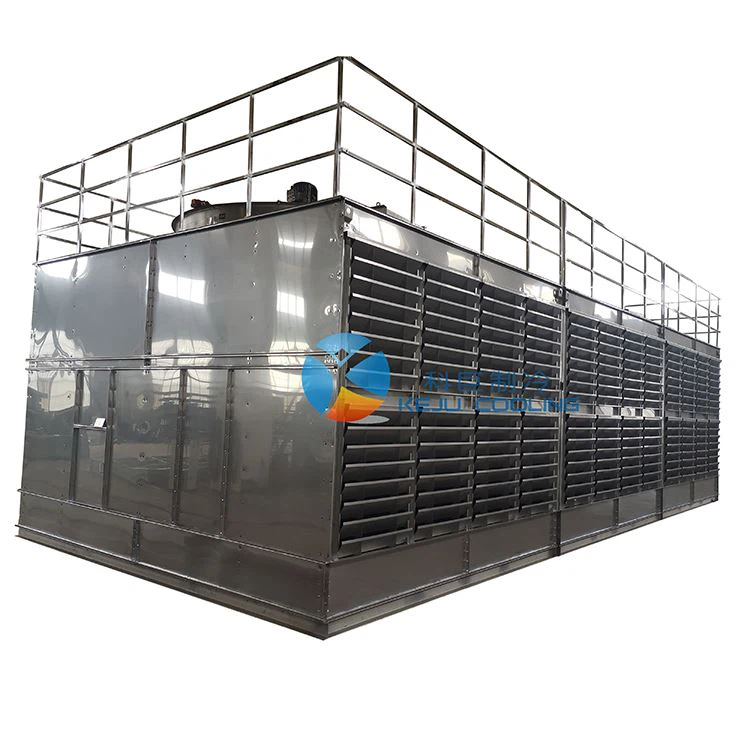
Open circuit cooling towers, such as the Cross Flow Open Loop Cooling Tower, Open Circuit Evaporative Cooling Tower, and Cross Flow Open Type Cooling Tower, operate by exposing water to the atmosphere. This open - air operation makes them vulnerable to biofouling. Biofouling refers to the accumulation of living organisms, such as bacteria, algae, fungi, and protozoa, along with their associated extracellular polymeric substances (EPS), on the surfaces within the cooling tower system.
The warm and moist environment of an open circuit cooling tower provides an ideal habitat for these microorganisms. Water droplets in the cooling tower carry nutrients, and the large surface area of the fill material, pipes, and heat exchangers offers plenty of attachment points for the organisms to colonize. Once the initial colonization occurs, the biofilm formed by these organisms can grow and spread rapidly.
Impact on Heat Transfer Efficiency
One of the most significant impacts of biofouling on an open circuit cooling tower is the reduction in heat transfer efficiency. The biofilm acts as an insulating layer between the water and the heat transfer surfaces. In a well - functioning cooling tower, heat is transferred from the hot process water to the cooler air passing through the tower. However, when biofouling occurs, the biofilm increases the thermal resistance at the heat transfer interface.

As a result, the rate of heat transfer decreases. To maintain the desired cooling capacity, the cooling tower may need to operate for longer periods or at higher fan speeds. This not only increases energy consumption but also puts additional stress on the mechanical components of the tower, such as the fans and pumps. Over time, the reduced heat transfer efficiency can lead to higher operating costs and decreased process efficiency for the industrial or commercial processes relying on the cooling tower.
Impact on Water Flow and Pressure Drop
Biofouling can also disrupt the normal water flow within the cooling tower. The biofilm can accumulate on the fill material, which is designed to maximize the contact area between water and air for efficient heat transfer. As the biofilm grows, it can clog the small passages in the fill, reducing the water flow rate.
This restricted water flow leads to an increase in pressure drop across the cooling tower. Higher pressure drop means that the pumps need to work harder to circulate the water, consuming more energy. Moreover, uneven water distribution due to clogging can cause some areas of the cooling tower to be under - utilized, while others may experience excessive water flow, further reducing the overall cooling efficiency.
Impact on Water Quality
The presence of biofouling in an open circuit cooling tower can have a negative impact on water quality. The microorganisms in the biofilm can produce various metabolites, some of which are corrosive or can cause odor and discoloration of the water. For example, certain bacteria can produce sulfur - containing compounds, which give the water a foul smell.
Biofouling can also promote the growth of Legionella bacteria, which are a significant health concern. Legionella can cause Legionnaires' disease, a severe form of pneumonia, when inhaled in the form of water droplets. In an open circuit cooling tower, the aerosolization of water droplets during the cooling process can spread these bacteria into the surrounding environment. Therefore, biofouling not only affects the performance of the cooling tower but also poses a potential health risk to the people in the vicinity.
Impact on Equipment Lifespan
Biofouling can accelerate the corrosion of the metal components in the cooling tower. The biofilm creates a micro - environment that is different from the bulk water chemistry. The EPS produced by the microorganisms can trap dissolved oxygen and other corrosive substances, leading to localized corrosion on the metal surfaces.
Corrosion can weaken the structural integrity of the cooling tower components, such as the pipes, heat exchangers, and the tower structure itself. This can result in leaks, equipment failures, and costly repairs or replacements. Additionally, the increased stress on the mechanical components due to reduced heat transfer efficiency and increased pressure drop can also shorten their lifespan.
Impact on Maintenance Requirements
Biofouling significantly increases the maintenance requirements of an open circuit cooling tower. Regular cleaning and disinfection are necessary to control the growth of biofilm. Manual cleaning of the fill material, pipes, and other components can be a labor - intensive and time - consuming process. Chemical treatments, such as biocides, are often used to kill the microorganisms, but these treatments need to be carefully managed to avoid environmental and health risks.
The frequency of maintenance also increases as biofouling progresses. If left untreated, the biofilm can become so thick that it may require more aggressive cleaning methods, such as high - pressure water jetting or chemical stripping. These methods can be expensive and may cause damage to the cooling tower components if not performed correctly.
Mitigation Strategies
To minimize the impacts of biofouling on open circuit cooling towers, several mitigation strategies can be employed. Regular monitoring of water quality and biofilm growth is essential. This can involve testing the water for microbial counts, pH, and other parameters on a regular basis.
Proper water treatment is crucial. This includes the use of biocides to control microbial growth, as well as chemicals to prevent scale formation and corrosion. However, the selection and dosage of these chemicals need to be carefully optimized to ensure their effectiveness while minimizing environmental and health impacts.
Improving the design of the cooling tower can also help prevent biofouling. For example, using smooth - surfaced materials for the fill and pipes can reduce the attachment points for microorganisms. Additionally, proper water distribution systems can ensure more uniform water flow, reducing the areas where biofouling is likely to occur.
Conclusion
Biofouling has a wide range of negative impacts on open circuit cooling towers, including reduced heat transfer efficiency, disrupted water flow, poor water quality, shortened equipment lifespan, and increased maintenance requirements. As a supplier of open circuit cooling towers, we are committed to providing our customers with solutions to mitigate these impacts.
We offer high - quality cooling towers, such as the Cross Flow Open Loop Cooling Tower, Open Circuit Evaporative Cooling Tower, and Cross Flow Open Type Cooling Tower, which are designed with features to minimize biofouling. We also provide comprehensive maintenance and water treatment services to help our customers keep their cooling towers operating efficiently.
If you are looking for an open circuit cooling tower solution or need assistance with biofouling management in your existing cooling tower, we invite you to contact us for a detailed discussion. Our team of experts is ready to provide you with customized solutions to meet your specific needs.
References
- Bott, T. R. (1995). Biofouling of heat exchangers. Elsevier.
- Characklis, W. G., & Marshall, K. C. (1990). Biofilms. Wiley - Interscience.
- USEPA. (2008). Cooling Tower Management: A Guide to Minimizing Legionella Growth and Spread. U.S. Environmental Protection Agency.