

How does an open circuit evaporative cooling tower work in a power plant?
Dec 25, 2025
As a leading supplier of open circuit evaporative cooling towers, I'm excited to delve into the inner workings of these essential components in power plants. These cooling towers play a critical role in maintaining the efficiency and safety of power generation processes, ensuring that power plants can operate smoothly and effectively.
The Basics of Open Circuit Evaporative Cooling Towers
Open circuit evaporative cooling towers are designed to remove heat from a power plant's water systems by utilizing the principle of evaporative cooling. In a power plant, large amounts of heat are generated during the energy production process. This heat is typically transferred to water, which then needs to be cooled before it can be reused in the power generation cycle.
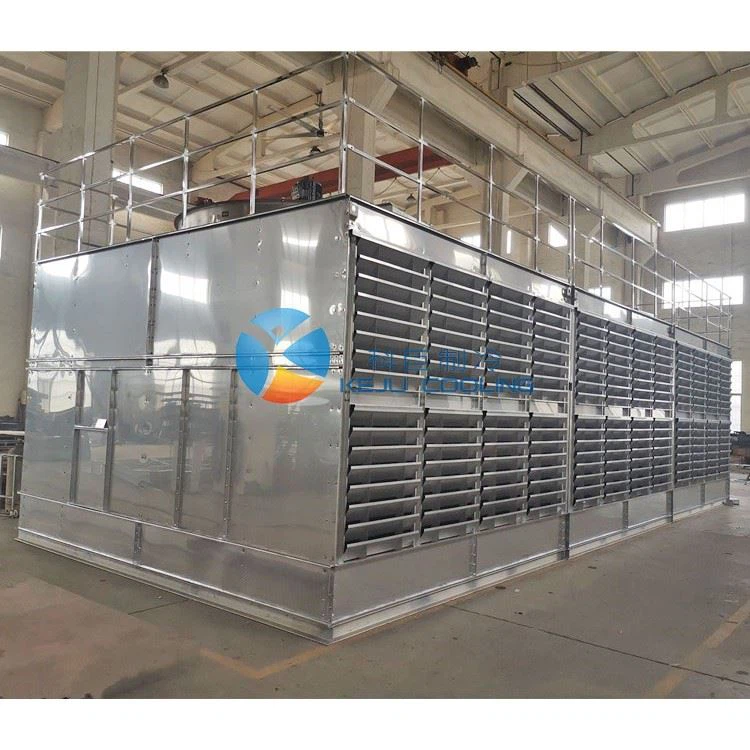
The basic components of an open circuit evaporative cooling tower include a water distribution system, fill media, a fan system, and a collection basin. The water distribution system is responsible for evenly distributing the hot water from the power plant over the fill media. The fill media provides a large surface area for the water to come into contact with the air, increasing the efficiency of the heat transfer process.
The fan system draws air through the cooling tower, creating a draft that helps to evaporate a portion of the water. As the water evaporates, it absorbs heat from the remaining water, cooling it down. The cooled water then collects in the basin at the bottom of the cooling tower and is pumped back to the power plant for reuse.
The Evaporative Cooling Process
The evaporative cooling process is at the heart of how an open circuit evaporative cooling tower works. When hot water is distributed over the fill media in the cooling tower, it forms a thin film on the surface of the media. Simultaneously, the fan system draws ambient air through the cooling tower, causing the air to flow over the water film.
As the air passes over the water film, a small amount of water evaporates. The process of evaporation requires energy, which is taken from the remaining water in the form of heat. This heat transfer causes the temperature of the water to decrease. The evaporated water vapor is then carried out of the cooling tower by the air stream, while the cooled water collects in the basin.
The efficiency of the evaporative cooling process depends on several factors, including the surface area of the fill media, the air flow rate, and the temperature and humidity of the ambient air. A larger surface area of the fill media allows for more water to come into contact with the air, increasing the rate of evaporation. Similarly, a higher air flow rate helps to remove the water vapor more quickly, promoting continuous evaporation.
The Role in a Power Plant
In a power plant, open circuit evaporative cooling towers are crucial for maintaining the proper temperature of the cooling water. Most power plants use water for various cooling purposes, such as cooling the condensers in steam turbines. If the cooling water temperature is too high, it can reduce the efficiency of the power generation process and potentially cause damage to the equipment.
By effectively cooling the water, the cooling towers help to improve the overall efficiency of the power plant. They also ensure that the equipment operates within the safe temperature range, extending its lifespan and reducing the risk of breakdowns. Additionally, the use of open circuit evaporative cooling towers is a relatively cost - effective way to cool large volumes of water compared to other cooling methods.
Our Product Offerings
At our company, we offer a variety of high - quality open circuit evaporative cooling towers to meet the diverse needs of power plants. One of our popular products is the Cross Flow Steel Open Cooling Tower. This cooling tower features a cross - flow design, which allows for efficient heat transfer and easy maintenance. The steel construction ensures durability and long - term reliability, making it suitable for harsh industrial environments.
Another great option is the Square Crossflow Open Circuit Cooling Tower. This tower has a square cross - sectional shape, which provides a compact footprint while still delivering excellent cooling performance. It is designed with advanced fill media and a powerful fan system to optimize the evaporative cooling process.
We also have the Square Cross Flow Open Cooling Tower, which combines the benefits of a square design with a cross - flow configuration. This cooling tower is engineered to provide high - efficiency cooling with minimal energy consumption, making it an environmentally friendly choice for power plants.
Maintenance and Efficiency
To ensure the long - term performance of open circuit evaporative cooling towers in power plants, regular maintenance is essential. This includes cleaning the fill media to prevent the buildup of debris and scale, which can reduce the surface area available for evaporation. It is also important to inspect the water distribution system to ensure that the water is evenly distributed over the fill media.
The fan system should be checked regularly for proper operation, and the motor and blades should be maintained to ensure efficient air flow. Additionally, the water quality in the cooling tower should be monitored to prevent the growth of algae and bacteria, which can not only affect the cooling efficiency but also pose health risks.
By following a comprehensive maintenance schedule, power plants can ensure that their open circuit evaporative cooling towers continue to operate at peak efficiency, reducing energy consumption and operating costs.
Why Choose Our Cooling Towers
There are several reasons why power plants should choose our open circuit evaporative cooling towers. First, our towers are designed with the latest technology and engineering principles to provide maximum cooling efficiency. We use high - quality materials in the construction of our towers, ensuring durability and reliability in even the most challenging conditions.
Our team of experts is also available to provide customized solutions based on the specific needs of each power plant. We offer comprehensive售前 and after - sales support, including installation guidance, maintenance training, and technical assistance.
In addition, our cooling towers are designed to be energy - efficient, helping power plants to reduce their carbon footprint and operating costs. By choosing our products, power plants can not only improve the performance of their cooling systems but also contribute to a more sustainable future.

Contact Us for Procurement
If you are a power plant operator or manager looking for a reliable open circuit evaporative cooling tower solution, we invite you to contact us for procurement discussions. Our team will be happy to provide you with detailed product information, pricing, and any other assistance you may need. We are committed to helping you find the best cooling tower solution for your power plant and ensuring its successful operation.
References
- Kreith, F., & Manglik, R. M. (2010). Principles of Heat Transfer. Cengage Learning.
- ASHRAE Handbook - HVAC Systems and Equipment (2020). American Society of Heating, Refrigerating and Air - Conditioning Engineers.
- Cooling Technology Institute. (2019). Cooling Tower Fundamentals.