

What are the components of a Crossflow Open Type Cooling Tower?
Oct 24, 2025
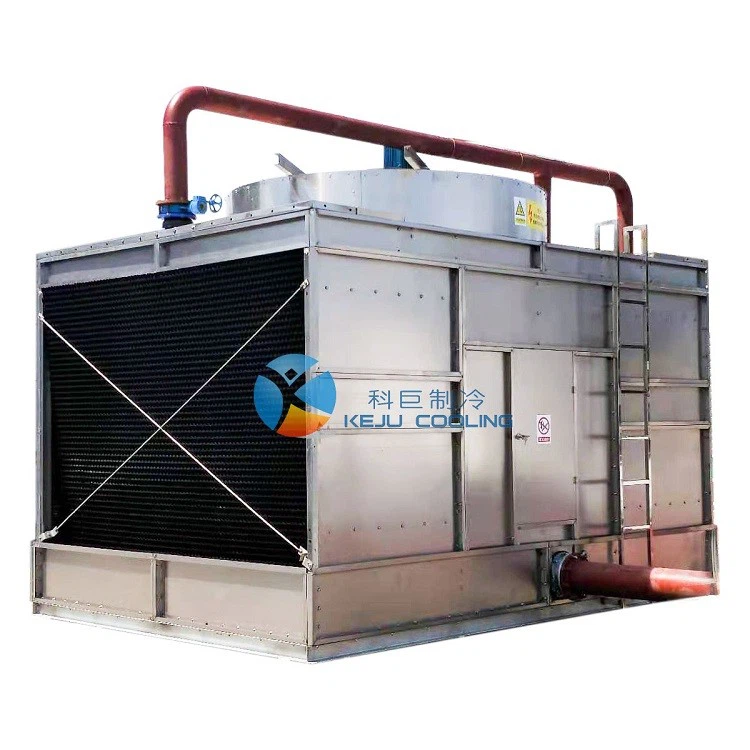
A crossflow open type cooling tower is a crucial piece of equipment in many industrial and commercial applications. As a supplier of crossflow open type cooling towers, I am well - versed in the components that make up these efficient cooling systems. In this blog, I will delve into the key components of a crossflow open type cooling tower, explaining their functions and importance.
Fill Media
The fill media is one of the most important components of a crossflow open type cooling tower. It provides a large surface area for the contact between the hot water and the air. When the hot water is distributed over the fill media, it forms a thin film, which allows for maximum heat transfer to the air passing through. There are different types of fill media available, such as splash fill and film fill. Splash fill consists of a series of horizontal or vertical bars that break up the water into droplets, increasing the surface area for heat transfer. Film fill, on the other hand, is made of thin sheets that create a continuous film of water, enhancing the heat - transfer process.
The fill media's performance is measured by its heat - transfer efficiency and its resistance to fouling. A high - quality fill media can significantly improve the cooling tower's overall efficiency. For example, in a large industrial plant, a well - designed fill media can reduce the energy consumption of the cooling system by allowing more effective heat transfer, which in turn requires less power to operate the fans and pumps. You can learn more about the overall cooling process in an Open Circuit Evaporative Cooling Tower.
Water Distribution System
The water distribution system is responsible for evenly distributing the hot water over the fill media. It typically consists of a network of pipes and nozzles. The pipes carry the hot water from the inlet to the nozzles, which spray the water onto the fill media.
Proper water distribution is essential for the efficient operation of the cooling tower. If the water is not distributed evenly, some parts of the fill media may receive too much water, while others may receive too little. This can lead to uneven heat transfer and reduced cooling efficiency. For instance, if a nozzle is clogged, the area below it will not receive an adequate supply of water, resulting in poor heat transfer in that region.
The design of the water distribution system also takes into account factors such as water pressure, flow rate, and the size and shape of the cooling tower. A well - engineered water distribution system ensures that the water is spread uniformly across the fill media, maximizing the heat - transfer potential of the cooling tower.
Fan and Motor Assembly
The fan and motor assembly is used to draw air through the cooling tower. In a crossflow open type cooling tower, the air flows horizontally across the flow of water. The fan creates a negative pressure inside the tower, which pulls the air in through the sides of the tower and forces it to pass through the fill media.
The size and power of the fan and motor depend on the size and capacity of the cooling tower. A larger cooling tower will require a more powerful fan to move a sufficient volume of air. The motor drives the fan, and its efficiency is crucial for minimizing energy consumption. Modern fans are designed to be aerodynamically efficient, which means they can move a large volume of air with less power.
The fan and motor assembly also needs to be properly maintained. Regular inspections for wear and tear, lubrication of moving parts, and cleaning of the fan blades are necessary to ensure optimal performance. A malfunctioning fan can lead to reduced air flow, which in turn reduces the cooling capacity of the tower. You can explore our range of Steel Crossflow Open Cooling Tower which are equipped with high - performance fan and motor assemblies.
Drift Eliminators
Drift eliminators are installed in the cooling tower to prevent water droplets from being carried out of the tower by the exhaust air. When the air passes through the fill media and picks up heat and moisture, it can carry small water droplets, known as drift, out of the tower. Drift can cause several problems, such as water loss, corrosion of nearby equipment, and the spread of contaminants.

Drift eliminators work by changing the direction of the air flow, causing the water droplets to collide with the surfaces of the eliminator and coalesce into larger droplets. These larger droplets then fall back into the cooling tower. There are different types of drift eliminators, including baffle - type and vane - type.
The efficiency of drift eliminators is measured by the amount of drift they can remove. High - efficiency drift eliminators can reduce the drift rate to a very low level, typically less than 0.001% of the circulating water flow. This not only saves water but also protects the surrounding environment and equipment from damage.
Basin
The basin is located at the bottom of the cooling tower and is used to collect the cooled water. It serves as a reservoir for the water that will be recirculated through the system. The basin should be large enough to hold an adequate supply of water to ensure continuous operation of the cooling tower.
The basin also needs to be designed to prevent sedimentation and the growth of algae and bacteria. A well - designed basin will have a sloped bottom to allow for easy removal of sediment, and it may be equipped with a water treatment system to control the growth of microorganisms.
In addition, the basin should be made of a durable material that can resist corrosion and the effects of the chemicals used in the cooling water treatment. For example, in a cooling tower that uses a high - concentration of chemicals for water treatment, a fiberglass - reinforced plastic basin may be a suitable choice due to its chemical resistance.
Louvers
Louvers are installed on the sides of the cooling tower to control the air intake. They can be adjustable or fixed, depending on the design requirements of the cooling tower. Adjustable louvers allow for better control of the air flow rate and direction, which can be useful in different operating conditions.
The main function of louvers is to prevent debris, such as leaves and insects, from entering the cooling tower. They also help to distribute the air evenly across the fill media. By controlling the air intake, louvers can improve the overall efficiency of the cooling tower. For example, in a windy environment, properly adjusted louvers can direct the air in a way that maximizes the contact between the air and the water in the fill media.
Structural Frame
The structural frame provides the support for all the components of the cooling tower. It needs to be strong enough to withstand the weight of the fill media, water, fan, and other equipment, as well as external forces such as wind and seismic loads.
The structural frame is typically made of steel or concrete. Steel frames are lightweight and easy to install, while concrete frames offer high durability and resistance to corrosion. The design of the structural frame takes into account factors such as the height and size of the cooling tower, the local environmental conditions, and the load - bearing requirements.
A well - designed structural frame ensures the stability and safety of the cooling tower. It also provides a solid foundation for the proper installation and operation of all the other components.
Instrumentation and Controls
Instrumentation and controls are used to monitor and regulate the operation of the cooling tower. Sensors are installed to measure parameters such as water temperature, flow rate, and pH level. These sensors send signals to a control system, which can then adjust the operation of the cooling tower accordingly.
For example, if the water temperature is too high, the control system can increase the fan speed to increase the air flow and enhance the cooling effect. If the pH level of the water is outside the desired range, the control system can activate the water treatment system to adjust the chemical dosage.
The use of advanced instrumentation and controls can improve the energy efficiency and reliability of the cooling tower. It allows for real - time monitoring and optimization of the cooling process, reducing the risk of equipment failure and improving the overall performance of the cooling system.
As a supplier of Cross Flow Open Type Cooling Tower, we understand the importance of each component in a crossflow open type cooling tower. Our products are designed with high - quality components to ensure efficient and reliable operation. If you are in the market for a crossflow open type cooling tower or need to upgrade your existing system, we invite you to contact us for a detailed discussion about your specific requirements. We are committed to providing you with the best solutions for your cooling needs.
References
- ASHRAE Handbook - HVAC Systems and Equipment. American Society of Heating, Refrigerating and Air - Conditioning Engineers.
- Cooling Tower Institute (CTI) Standards. Cooling Tower Institute.
- "Industrial Cooling Tower Design and Operation" by John Doe. A technical publication on cooling tower technology.