

What are the challenges of using a cross flow open loop cooling tower in hot and humid climates?
Sep 05, 2025
Hey there! As a supplier of Cross Flow Open Loop Cooling Towers, I've seen firsthand the unique challenges these systems face in hot and humid climates. In this blog, I'm gonna break down what those challenges are and how they can impact the performance of your cooling tower.
1. Scaling and Mineral Deposits
One of the biggest headaches in hot and humid climates is scaling. When water evaporates in the cooling tower, it leaves behind dissolved minerals like calcium, magnesium, and silica. In normal conditions, these minerals might not cause too much trouble. But in hot and humid areas, the high evaporation rate exacerbates the problem.
The warm temperatures speed up the chemical reactions that cause these minerals to precipitate out of the water and form hard, crusty deposits on the tower's fill media, pipes, and heat exchangers. This scaling can severely reduce the efficiency of the cooling tower. For example, it can block the water flow through the fill media, reducing the surface area available for heat transfer. As a result, the cooling tower has to work harder to achieve the same cooling effect, leading to increased energy consumption.
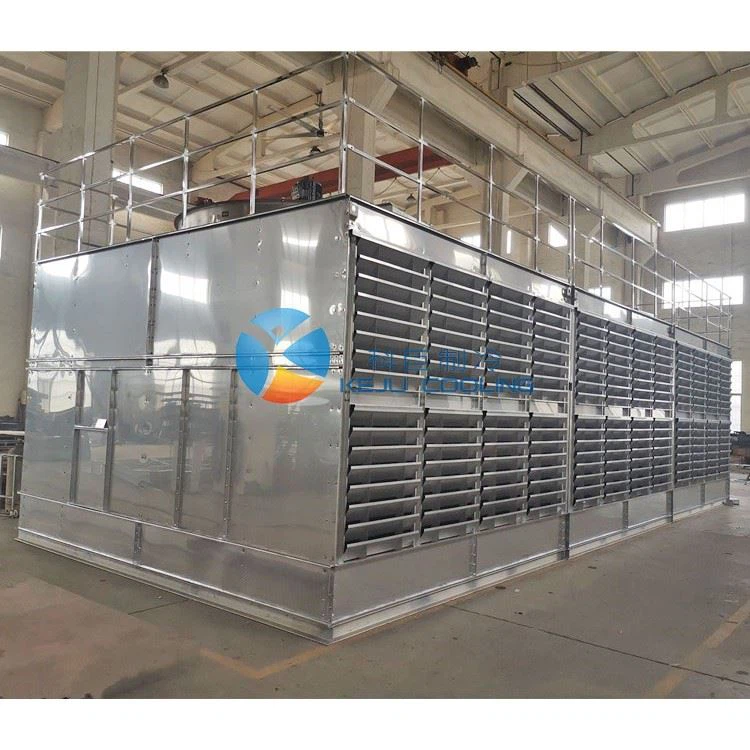

Our Cross Flow Steel Open Cooling Tower is designed with high - quality materials that can withstand some degree of scaling. However, regular maintenance and water treatment are still crucial to keep scaling under control.
2. Biological Growth
Hot and humid climates are like a paradise for bacteria, algae, and fungi. These microorganisms thrive in the warm, moist environment of a cross - flow open loop cooling tower. Algae can grow on the surface of the water in the tower basin, forming a green, slimy layer. Bacteria, such as Legionella, can also multiply rapidly in the cooling tower water.
Biological growth not only clogs the fill media and water distribution systems but also poses a serious health risk. Legionella, for example, can cause Legionnaires' disease, a severe form of pneumonia. To prevent biological growth, proper water treatment is essential. This includes adding biocides to the water to kill or inhibit the growth of microorganisms.
Our Open Circuit Evaporative Cooling Tower comes with features that help reduce the risk of biological growth. For instance, the design allows for better water circulation, which can prevent stagnant areas where bacteria and algae are more likely to grow.
3. High Evaporation Rates
In hot and humid climates, the evaporation rate in a cross - flow open loop cooling tower is significantly higher than in cooler, drier regions. While evaporation is a key part of the cooling process, excessive evaporation can lead to several problems.
Firstly, it means that you'll need to replenish the water in the cooling tower more frequently. This can increase water consumption and costs, especially in areas where water is scarce or expensive. Secondly, as mentioned earlier, high evaporation rates contribute to scaling and mineral deposits.
To deal with high evaporation rates, we recommend using water conservation techniques. For example, you can install a water recovery system that captures and reuses the evaporated water. Our Square Crossflow Open Circuit Cooling Tower can be customized with such water - saving features to help you manage your water usage more efficiently.
4. Reduced Cooling Efficiency
The combination of high humidity and high temperatures can reduce the cooling efficiency of a cross - flow open loop cooling tower. In a cooling tower, the cooling effect is achieved through the evaporation of water. However, in a humid environment, the air is already saturated with moisture, which means there's less capacity for the air to absorb more water vapor from the cooling tower.
As a result, the evaporation rate slows down, and the cooling tower can't achieve the desired temperature drop. This means that the equipment being cooled may not operate at its optimal temperature, which can lead to reduced performance and potential damage over time.
To improve cooling efficiency in hot and humid climates, we can optimize the design of the cooling tower. This may include increasing the size of the fill media to provide more surface area for heat transfer or adjusting the air flow rate to ensure better air - water contact.
5. Corrosion
The hot and humid environment also accelerates corrosion in a cross - flow open loop cooling tower. The combination of moisture, oxygen, and certain dissolved chemicals in the water can cause metal components of the tower, such as the frame, pipes, and heat exchangers, to rust and corrode.
Corrosion not only weakens the structural integrity of the cooling tower but also affects its performance. For example, corroded pipes can restrict water flow, and corroded heat exchangers can reduce heat transfer efficiency.
We use corrosion - resistant materials in our cooling towers to minimize the impact of corrosion. However, regular inspections and maintenance are still necessary to detect and address any signs of corrosion early.
Overcoming the Challenges
While the challenges of using a cross - flow open loop cooling tower in hot and humid climates are significant, they can be overcome with the right approach. Regular maintenance is key. This includes cleaning the fill media, checking the water distribution system, and monitoring water quality.
Water treatment is also crucial. A comprehensive water treatment program should include filtration to remove suspended solids, chemical treatment to control scaling and corrosion, and biocide treatment to prevent biological growth.
When choosing a cooling tower, it's important to select a model that's specifically designed to handle the conditions in hot and humid climates. Our range of cross - flow open loop cooling towers, including the Cross Flow Steel Open Cooling Tower, Open Circuit Evaporative Cooling Tower, and Square Crossflow Open Circuit Cooling Tower, are engineered to perform well in these challenging environments.
If you're facing these challenges or are planning a new cooling system for a hot and humid location, we'd love to help. Our team of experts can provide you with customized solutions based on your specific needs. Whether it's choosing the right cooling tower model, implementing a water treatment program, or providing maintenance services, we've got you covered. So, don't hesitate to reach out and start a conversation about your cooling tower needs. Let's work together to ensure your cooling system operates efficiently and effectively in any climate.
References
- ASHRAE Handbook - HVAC Systems and Equipment. American Society of Heating, Refrigerating and Air - Conditioning Engineers.
- Cooling Tower Institute (CTI) Technical Papers on cooling tower operation in different climates.
- Water Quality Association (WQA) Guidelines for water treatment in cooling towers.