

How to design a Closed Type Counterflow Cooling Tower to meet seismic standards?
Sep 15, 2025
Hey there! As a supplier of Closed Type Counterflow Cooling Towers, I've had my fair share of experiences in the industry. One of the big challenges we often face is designing these cooling towers to meet seismic standards. In this blog, I'm gonna share some insights on how to tackle this issue.
Understanding Seismic Standards
First off, we need to know what seismic standards are all about. Seismic standards are a set of rules and requirements that buildings and structures, including our Closed Type Counterflow Cooling Towers, have to follow in areas prone to earthquakes. These standards are put in place to ensure that the structures can withstand the forces generated during an earthquake and keep functioning safely.
The seismic standards vary from region to region. Some areas have more stringent requirements because they're located in high - risk seismic zones. Before we start designing a cooling tower, we gotta do our homework and find out what the specific seismic standards are for the location where the tower will be installed. You can usually get this information from local building codes and regulatory agencies.
Design Considerations for Seismic Resistance
Structural Integrity
The structural integrity of the Closed Type Counterflow Cooling Tower is crucial. We need to make sure that the tower's frame and supports are strong enough to handle the seismic forces. One way to do this is by using high - strength materials. For example, steel is a popular choice because it has good ductility, which means it can bend and deform without breaking under stress.
We also need to pay attention to the design of the connections between different parts of the tower. Welded connections are often preferred over bolted connections in seismic - prone areas because they provide a more continuous and stronger joint. However, proper welding techniques have to be used to ensure the quality of the welds.
Base Design
The base of the cooling tower is like its foundation. A well - designed base can help distribute the seismic forces evenly and prevent the tower from toppling over. We usually design a reinforced concrete base that's firmly anchored to the ground. The size and thickness of the base depend on the size and weight of the cooling tower, as well as the seismicity of the area.
In some cases, we might also use base isolation techniques. Base isolation involves placing flexible pads or bearings between the base of the tower and the ground. These pads can absorb and dissipate the seismic energy, reducing the impact on the tower itself. It's like putting shock absorbers on a car to make the ride smoother.
Component Securement
All the components inside the Closed Type Counterflow Cooling Tower, such as the heat exchangers, fans, and pumps, need to be properly secured. Loose components can become projectiles during an earthquake, causing damage to the tower and posing a safety hazard. We use brackets, straps, and other fastening devices to make sure that everything stays in place.
For example, the heat exchangers are often mounted on frames that are bolted to the tower's structure. The fans are also secured to their supports with vibration - resistant mounts to prevent them from vibrating loose during an earthquake.
Incorporating Seismic Design into the Overall Process
Early Planning
Seismic design should be considered right from the start of the project. When we're working with a client to design a Closed Type Counterflow Cooling Tower, we need to ask them about the location and the seismic risk of the area. This information will help us make the appropriate design decisions from the very beginning.
We can also use computer - aided design (CAD) software to simulate the seismic behavior of the cooling tower. This allows us to test different design options and make adjustments before the actual construction starts. It's like having a virtual test run to see how the tower will perform in an earthquake.
Quality Control
During the construction process, strict quality control measures have to be in place. We need to make sure that all the materials used meet the required standards and that the construction work is done according to the design specifications. Regular inspections should be carried out to check for any defects or deviations.
For example, we'll inspect the welds to make sure they're strong and free of cracks. We'll also check the installation of the components to ensure that they're properly secured. Any issues found during the inspections should be addressed immediately to avoid problems later on.

Benefits of Seismic - Resistant Design
Designing a Closed Type Counterflow Cooling Tower to meet seismic standards has several benefits. First of all, it enhances the safety of the tower and the people working around it. In the event of an earthquake, a seismic - resistant tower is less likely to collapse or cause damage, reducing the risk of injuries and fatalities.
Secondly, it can save costs in the long run. A tower that's designed to withstand seismic forces is less likely to be damaged during an earthquake, which means less repair and replacement costs. It also reduces the downtime of the cooling system, ensuring that the industrial processes that rely on the cooling tower can continue to operate smoothly.
Our Products and Services
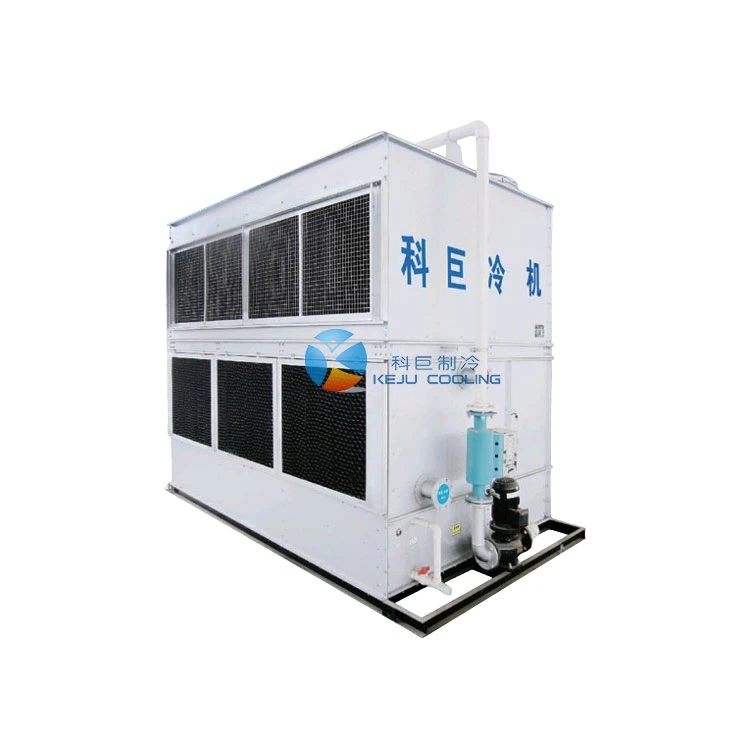
As a supplier of Closed Type Counterflow Cooling Towers, we offer a range of products that are designed to meet seismic standards. Our Counter Flow Closed Type Cooling Tower is a great option for areas with seismic risks. It features a robust structural design and high - quality components to ensure its seismic resistance.
We also have the Closed Type Counterflow Cooling Tower, which is designed with the latest technology to provide efficient cooling while meeting the strictest seismic standards. And if you're looking for an induced draft option, our Induced Draft Counter Flow Closed Cooling Tower is a top - notch choice.
We're not just about selling products. We also provide comprehensive services, including design consultation, installation, and maintenance. Our team of experts will work closely with you to understand your specific needs and design a cooling tower that meets all your requirements, including seismic resistance.
Contact Us for Purchase and Consultation
If you're in the market for a Closed Type Counterflow Cooling Tower and want to make sure it meets the seismic standards for your area, don't hesitate to get in touch with us. We're here to answer all your questions and help you make the right choice. Whether you're a small business or a large industrial facility, we have the solutions for you. Let's work together to design and install a cooling tower that's safe, efficient, and built to last.
References
- Building Seismic Safety Council. (Year). Seismic Design Guidelines for Industrial Structures.
- International Building Code. (Year). Seismic Provisions for Buildings.
- American Society of Civil Engineers. (Year). Seismic Design Standards for Structures.