

What is the growth potential of the open circuit cooling tower market?
Nov 21, 2026
If you've ever worked in manufacturing, power generation, HVAC, or even food processing, you've probably encountered open circuit cooling towers-those big, noisy, metal structures that look like industrial jigsaw puzzles perched on rooftops or factory floors. As someone who's been supplying these units for years, I get asked a lot: "Is there still room to grow in this market?" Spoiler: The short answer is yes, but it's not just about churning out more towers. The growth potential is tied to real-world industry needs, shifting regulations, and even small tweaks that make open circuit cooling towers way more efficient than they were a decade ago.
Let's start with the basics, because not everyone's familiar with the difference between open circuit and closed circuit towers. Open circuit ones work by letting process water (think water that's absorbed heat from a machine or system) directly mix with air, which cools it before it cycles back. It's straightforward, cost-effective, and been around forever-but that simplicity is exactly why it's still the go-to for 60% of industrial cooling applications, according to a 2023 report from Global Industry Analysts. For suppliers like me, that's the foundation of our market.
The biggest driver right now is industrial expansion. Places like Southeast Asia, parts of Africa, and even some regions in Latin America are ramping up manufacturing, solar power, and data centers at a pace we haven't seen since the 2010s. Take data centers, for example: each one uses an absurd amount of energy, and cooling is 40% of that energy use. Open circuit towers are cheap to install and maintain compared to closed loop systems, so cloud providers and tech companies are snapping them up left and right. Last year, a mid-sized data center in Singapore ordered three crossflow open type cooling towers from us specifically because they needed to scale fast without blowing their budget. If you're looking for reliable units tailored to that kind of demand, check out our Crossflow Open Type Cooling Tower page.
But it's not just new builds. Retrofits are a huge, underrated part of the market. A lot of aging industrial facilities have cooling towers that are 20+ years old-they leak water, use way more energy than necessary, and don't meet current environmental rules. For example, in the U.S., the EPA's Clean Water Act updated standards for water discharge from cooling towers back in 2020, and facilities that don't upgrade could face fines up to $50,000 per day. That means plant managers are either replacing their old units or retrofitting them with more efficient fills and drift eliminators. We've had clients come to us saying their old towers were wasting 15,000 gallons of water a day because of poor drift, and a quick swap to a new steel open water cooling tower cut that waste by 80%. If your facility is due for an upgrade, our Steel Open Water Cooling Tower line is designed to fit most existing foundations, so you don't have to redo your whole system.
Another big trend is water scarcity. Places like the Southwestern U.S., the Middle East, and parts of India are facing brutal droughts, and industries are under huge pressure to use less water. Open circuit cooling towers are typically "evaporative," meaning they lose some water as vapor, but modern designs have cut that way down. We've been working on square cross flow open cooling towers with variable-speed fans that adjust based on temperature, so you don't blast full power when it's cool outside. A winery in Central California used to lose 10,000 gallons a month on their old tower; switching to our Square Cross Flow Open Cooling Tower cut that to 2,000 gallons, and their water bill dropped by 70%. It's not just about saving money-facilities are getting incentives from local governments for reducing water use, too. That's a double win that's making many clients choose open circuit over other options now, not in spite of water efficiency, but because of it.
Of course, there are challenges. Some people think closed circuit towers are better for sensitive processes, like pharmaceutical manufacturing where water contamination is a risk. But new open circuit designs with integrated filtration systems have closed that gap. We added a side stream filter to our open circuit cross flow square cooling tower line last year, which keeps process water clean enough for pharma and biotech clients that didn't used to consider open circuit units. That's opened up a whole new segment for us, and it's proof that the market is evolving, not just stagnating.
Wait, let's talk about materials, too. Old open circuit towers were mostly made of galvanized steel, which rusts over time and needs frequent painting or replacement. Our steel crossflow open cooling towers use hot-dipped galvanization plus a powder coat finish that's corrosion-resistant, so they last 15 to 20 years instead of 10. In coastal areas, where salt air eats away at metal, that's a game-changer. A desalination plant in Saudi Arabia told us their previous towers lasted 7 years before rust started leaking, and our units have been up for 4 years with zero rust issues. That durability means clients are willing to pay a little more upfront to avoid costly downtime, which is great for our business and for the market as a whole.
Now, let's get to the numbers to back this up. The open circuit cooling tower market was valued at around $4.2 billion in 2023, and analysts predict it'll grow at a 4.8% annual rate through 2030. That might not sound like a lot, but when you account for inflation, it's a solid increase-and the biggest growth is coming from emerging markets. For example, India's industrial sector is expected to grow 7% a year until 2028, and their government is pushing for more manufacturing hubs, which all need cooling. We just set up a distribution center in Chennai to handle that demand, and we're already booking orders for 2025.
But it's not just about emerging markets. Even in places like Europe, where industrial growth is slower, there's a push for sustainability. The EU's Fit for 55 plan requires industries to cut carbon emissions by 55% by 2030, and cooling towers are a big part of that. Inefficient cooling systems account for a lot of unnecessary energy use, so upgrading to modern open circuit towers that use less power is an easy way for plants to hit their targets. A steel mill in Germany replaced 4 old, energy-hungry cooling towers with two of our open circuit units, and their energy bill went down by 22%-that's a huge win for their carbon footprint.
Of course, there's competition. Closed circuit towers, evaporative coolers, and even air coolers are nibbling at the edges of the market. But open circuit towers still have a cost advantage-they're 20 to 30% cheaper to install than closed loop systems, and maintenance is simpler. For small to mid-sized businesses, that's a deciding factor. A brewery in Texas with a tight budget didn't have the cash for a closed circuit tower, so they went with our crossflow open type cooling tower, and it's worked perfectly for the past two years.
As a supplier, we're not just selling a product-we're selling a solution. A lot of clients don't know what size tower they need, or how to position it to avoid noise issues (big ones are a problem in residential areas). That's why we offer custom sizing and on-site assessments, which is something a lot of big manufacturers don't do. We had a client in downtown Chicago that needed a tower for a grocery store's refrigeration system, and noise was a dealbreaker. We modified our square cross flow open cooling tower with a sound-dampening casing, and now it's quiet enough that no one in the neighboring apartments even notices it's there. That kind of flexibility is going to keep the market growing, because clients are looking for partners, not just products.
Wait, one more thing: drift. Drift is the small water droplets that get carried out of the tower, which can carry bacteria like Legionella. That's a big concern for public health, especially in urban areas. Modern open circuit towers have drift eliminators that capture 99% of those droplets, which eliminates that risk. We've had third-party tests done on our steel open water cooling towers that confirm they meet Legionella standards set by the CDC, so facilities in hospitals or schools can use them without worry. That's another barrier we've broken down, which opens up new sectors of the market.
So, putting this all together: The open circuit cooling tower market isn't just "growing" in the sense of more units being sold-it's evolving. It's moving from the old, rust-prone, high-water-waste units of the past to efficient, durable, flexible systems that fit modern industrial, environmental, and public health needs. For suppliers like us, that means there's plenty of room to grow, as long as we keep innovating and listening to what clients actually need.

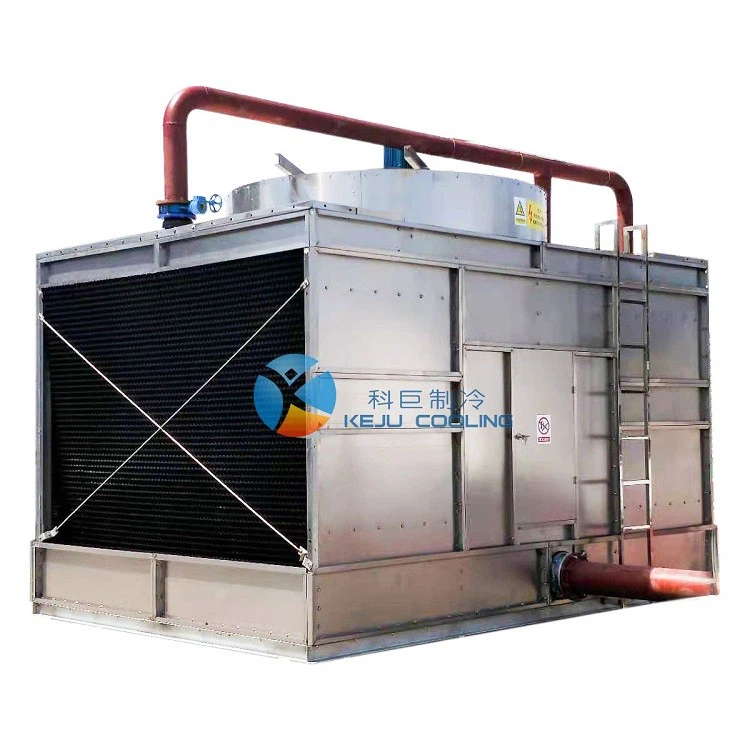
If you're a plant manager, engineer, or business owner looking to upgrade your cooling system, or if you're just curious about how open circuit towers can work for your operation, we'd love to chat. Our team can help you figure out the right size, design, and features to fit your needs, whether you're in manufacturing, data centers, food processing, or anything in between. Reach out to us to discuss your cooling tower requirements and explore how our solutions can support your operations.