

How does an open circuit evaporative cooling tower work in a chemical plant?
Aug 26, 2025
Hey there! I'm a supplier of Open Circuit Evaporative Cooling Towers, and today I'm gonna take you through how these nifty devices work in a chemical plant.
The Basics of an Open Circuit Evaporative Cooling Tower
First off, let's get a grip on what an Open Circuit Evaporative Cooling Tower is. An Open Circuit Evaporative Cooling Tower is a key piece of equipment in many industrial settings, especially chemical plants. Its main job is to cool down hot water that comes from industrial processes.
In a chemical plant, there are tons of reactions happening, and these reactions often generate a whole lot of heat. If this heat isn't managed properly, it can mess up the chemical processes and even damage the equipment. That's where the cooling tower steps in.
How It Works - The Process
1. Water Distribution
The process starts with the hot water from the chemical plant being pumped into the cooling tower. Once inside, the water is distributed evenly across the top of the tower. This is usually done through a system of pipes and nozzles. The goal here is to spread the water out as much as possible so that it has a large surface area exposed to the air.
2. Air Intake
At the same time, air is drawn into the tower. There are different ways to do this. Some cooling towers use natural draft, where the difference in air density between the inside and outside of the tower causes the air to flow in. Others use fans to force the air into the tower. This air is crucial because it helps with the cooling process.
3. Evaporation
As the hot water falls down through the tower, it comes into contact with the incoming air. When this happens, a small amount of the water evaporates. Evaporation is a cooling process. You know how you feel cooler when you sweat and the sweat evaporates from your skin? It's the same principle here. When the water evaporates, it takes heat energy from the remaining water, cooling it down.
4. Heat Transfer
The heat from the hot water is transferred to the air through a combination of evaporation and direct contact. The warmer, moister air is then expelled from the top of the tower. Meanwhile, the now-cooled water collects at the bottom of the tower, also known as the cold water basin.

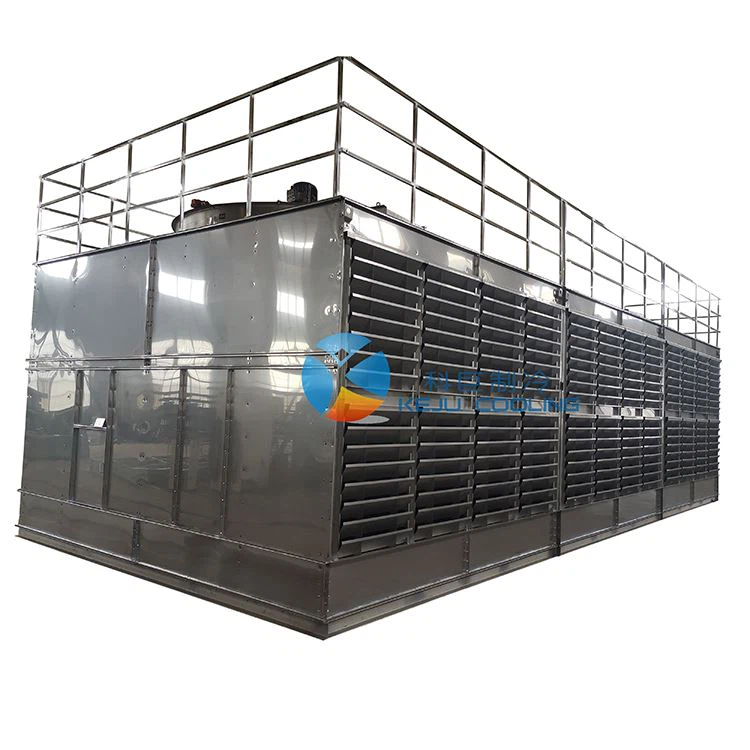
5. Recirculation
The cooled water in the cold water basin is then pumped back to the chemical plant to be used again in the industrial processes. This recirculation system helps to conserve water and keep the chemical processes running smoothly.
Types of Open Circuit Evaporative Cooling Towers in Chemical Plants
There are different types of open circuit evaporative cooling towers that can be used in chemical plants. Two common types are the Square Crossflow Open Circuit Cooling Tower and the Cross Flow Open Loop Cooling Tower.
Square Crossflow Open Circuit Cooling Tower
In a square crossflow open circuit cooling tower, the air flows horizontally across the falling water. This design allows for a more efficient heat transfer because the air and water have a longer contact time. The square shape also makes it easier to install and maintain, especially in tight spaces in a chemical plant.
Cross Flow Open Loop Cooling Tower
The cross flow open loop cooling tower also has air flowing horizontally across the water. However, it has a different internal structure. This type of tower is known for its low noise operation, which can be a big plus in a chemical plant where there are already a lot of noisy machines. It's also relatively easy to clean and inspect, which is important for maintaining the efficiency of the cooling process.
Benefits of Using Open Circuit Evaporative Cooling Towers in Chemical Plants
Energy Efficiency
One of the biggest benefits is energy efficiency. By using the natural process of evaporation to cool the water, these cooling towers use less energy compared to other cooling methods. This can lead to significant cost savings for the chemical plant in the long run.
Water Conservation
As mentioned earlier, the recirculation of water in the cooling tower helps to conserve water. In a chemical plant, where large amounts of water are used in the industrial processes, this is a huge advantage. It also helps the plant to meet environmental regulations regarding water usage.
Process Stability
Proper cooling is essential for maintaining the stability of the chemical processes. By keeping the temperature of the water within a certain range, the cooling tower ensures that the chemical reactions happen as they should. This can improve the quality of the products and reduce the risk of equipment failure.
Maintenance and Considerations
Like any piece of equipment, open circuit evaporative cooling towers require regular maintenance. This includes cleaning the nozzles and pipes to prevent clogging, checking the fans and motors for proper operation, and monitoring the water quality.
In a chemical plant, the water used in the cooling tower can contain chemicals and contaminants from the industrial processes. These can cause scaling, corrosion, and biological growth in the tower. So, it's important to have a good water treatment system in place to keep the water clean and the tower running smoothly.
Why Choose Our Open Circuit Evaporative Cooling Towers
As a supplier, I can tell you that our open circuit evaporative cooling towers are top-notch. We use high-quality materials and advanced manufacturing techniques to ensure that our towers are durable and efficient. Our team of experts can also provide customized solutions based on the specific needs of your chemical plant.
Whether you need a square crossflow open circuit cooling tower or a cross flow open loop cooling tower, we've got you covered. We offer installation, maintenance, and after-sales support to make sure that your cooling tower works perfectly from day one.
If you're in the market for an open circuit evaporative cooling tower for your chemical plant, I'd love to have a chat with you. We can discuss your requirements, answer any questions you might have, and provide you with a quote. Don't hesitate to reach out and start the conversation about how our cooling towers can benefit your chemical plant.
References
- "Industrial Cooling Towers: Design and Applications" by P. K. Nag
- "Handbook of Industrial Water Treatment" by Frank N. Kemmer