

What is the temperature difference between the inlet and outlet water of a Square Cross Flow Open Cooling Tower?
Nov 10, 2025
The temperature difference between the inlet and outlet water of a Square Cross Flow Open Cooling Tower is a crucial parameter that reflects its cooling performance. As a supplier of Square Cross Flow Open Cooling Towers, I'd like to delve into this topic to provide a comprehensive understanding for potential customers.
Understanding the Basics of Square Cross Flow Open Cooling Towers
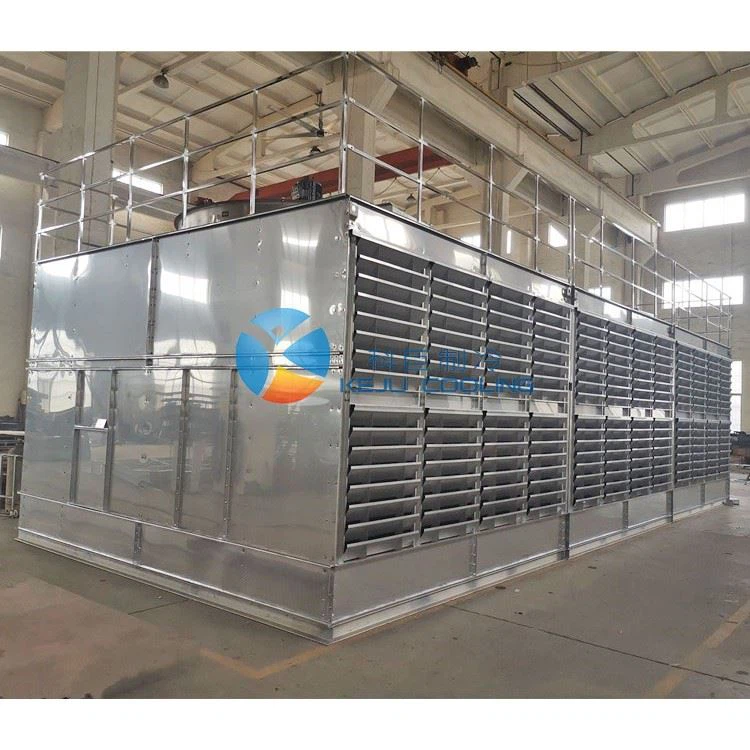
Before we discuss the temperature difference, let's briefly introduce Square Cross Flow Open Cooling Towers. These cooling towers are designed with a square - shaped structure and operate on the principle of cross - flow. In a cross - flow design, the hot water flows vertically downward through the fill media, while the air flows horizontally across the water path. This configuration allows for efficient heat transfer between the water and the air.
The Square Crossflow Open Circuit Cooling Tower is widely used in various industrial and commercial applications, such as power plants, chemical plants, and HVAC systems. Its open - circuit design means that the water is directly exposed to the atmosphere, which enables effective heat dissipation.
Factors Affecting the Inlet - Outlet Water Temperature Difference
1. Heat Load
The heat load is the amount of heat that needs to be removed from the water. It is directly proportional to the temperature difference between the inlet and outlet water. A higher heat load requires a larger temperature drop to achieve the desired cooling effect. For example, in a large - scale industrial process where a significant amount of heat is generated, the cooling tower needs to handle a high heat load. As a result, the temperature difference between the inlet and outlet water will be relatively large.
2. Airflow Rate
The airflow rate through the cooling tower plays a vital role in determining the temperature difference. A higher airflow rate means more fresh air is available to absorb the heat from the water. When the air moves across the fill media, it picks up the heat from the hot water and carries it away. If the airflow rate is insufficient, the heat transfer efficiency will be reduced, and the temperature difference between the inlet and outlet water will be smaller.
3. Fill Media Efficiency
The fill media in a cooling tower provides a large surface area for the water - air contact. The more efficient the fill media, the better the heat transfer. High - quality fill media can enhance the heat transfer coefficient, allowing for a greater temperature drop between the inlet and outlet water. Different types of fill media have different performance characteristics, and choosing the right one is essential for achieving the desired temperature difference.
4. Ambient Conditions
The ambient temperature and humidity have a significant impact on the cooling tower's performance. In hot and humid conditions, the air has a higher moisture content, which reduces its ability to absorb more water vapor and heat. As a result, the temperature difference between the inlet and outlet water may be smaller compared to dry and cool conditions.
Calculating the Inlet - Outlet Water Temperature Difference
The temperature difference (ΔT) between the inlet and outlet water can be calculated using the following formula:
ΔT = T_in - T_out
where T_in is the temperature of the water at the inlet of the cooling tower, and T_out is the temperature of the water at the outlet.
For example, if the inlet water temperature is 40°C and the outlet water temperature is 30°C, then the temperature difference ΔT = 40 - 30 = 10°C.
Importance of the Inlet - Outlet Water Temperature Difference
1. Cooling Efficiency
A larger temperature difference between the inlet and outlet water indicates higher cooling efficiency. When the cooling tower can achieve a significant temperature drop, it means that more heat is being removed from the water with the same amount of energy input. This leads to cost savings in terms of energy consumption and operational costs.

2. System Performance
In industrial and commercial systems, the proper functioning of equipment often depends on the temperature of the cooling water. A sufficient temperature difference ensures that the equipment operates within the desired temperature range, which helps to maintain its performance and extend its service life.
Our Square Cross Flow Open Cooling Towers and Temperature Difference
As a supplier of Square Cross Flow Open Cooling Towers, we are committed to providing high - performance products that can achieve a significant temperature difference between the inlet and outlet water. Our Cross Flow Open Loop Cooling Tower is designed with advanced technology and high - quality materials to ensure efficient heat transfer.
We use state - of - the - art fill media that maximizes the water - air contact area and enhances the heat transfer coefficient. Our cooling towers are also equipped with powerful fans that can provide a high airflow rate, even in challenging ambient conditions. This combination of features allows our cooling towers to achieve a large temperature difference between the inlet and outlet water, ensuring excellent cooling performance.
In addition, our Steel Crossflow Open Cooling Tower is constructed with high - strength steel, which provides durability and reliability. The square design of our cooling towers offers a compact footprint while maintaining high cooling capacity.
Contact Us for Purchase and Negotiation
If you are interested in our Square Cross Flow Open Cooling Towers and want to learn more about the temperature difference and other performance parameters, we welcome you to contact us. Our team of experts is ready to provide you with detailed information and assist you in choosing the right cooling tower for your specific needs. Whether you are in the industrial or commercial sector, we can offer customized solutions to meet your requirements.
References
- "Cooling Tower Fundamentals" by the Cooling Technology Institute.
- "Heat Transfer in Industrial Cooling Systems" by John Wiley & Sons.
- "Design and Operation of Open - Circuit Cooling Towers" by Elsevier.