

What is the impact of the water inlet temperature on the performance of a Crossflow Open Type Cooling Tower?
Nov 26, 2025
The performance of a Crossflow Open Type Cooling Tower is influenced by a multitude of factors, among which the water inlet temperature plays a crucial and often underestimated role. As a supplier of Crossflow Open Type Cooling Tower, I have witnessed firsthand the significant impact that water inlet temperature can have on the overall functionality and efficiency of these cooling systems.
Understanding the Basics of Crossflow Open Type Cooling Towers
Before delving into the impact of water inlet temperature, it is essential to have a clear understanding of how Crossflow Open Type Cooling Towers operate. These cooling towers are designed to remove heat from water by bringing it into direct contact with air. In a crossflow design, the water flows vertically downward through the fill media while the air moves horizontally across the flow of water. This counter - current flow pattern allows for efficient heat transfer between the water and the air.
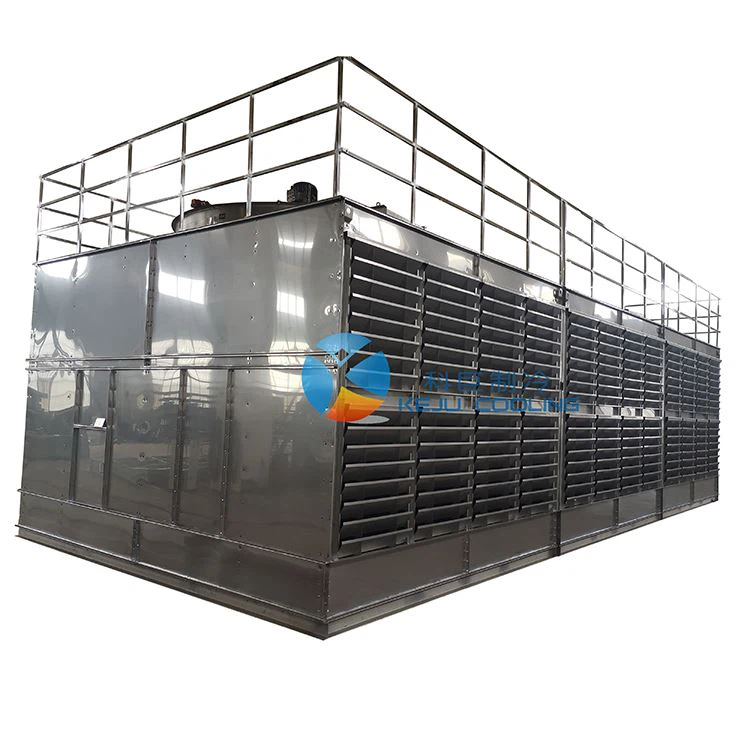
The Cross Flow Open Loop Cooling Tower is a type of crossflow open - type cooling tower that is commonly used in industrial and commercial applications. It operates on an open - loop system, where the water is exposed to the atmosphere during the cooling process. The Open Circuit Evaporative Cooling Tower is another related type, which relies on the evaporation of water to dissipate heat.
Impact on Heat Transfer Efficiency
The water inlet temperature has a direct impact on the heat transfer efficiency of a Crossflow Open Type Cooling Tower. Heat transfer in a cooling tower occurs through two main mechanisms: sensible heat transfer and latent heat transfer. Sensible heat transfer is the transfer of heat due to a temperature difference between the water and the air, while latent heat transfer is the heat absorbed during the evaporation of water.
When the water inlet temperature is high, the temperature difference between the water and the air is larger. According to the laws of thermodynamics, a larger temperature difference results in a higher rate of heat transfer. This means that more heat can be removed from the water in a given time, leading to a more efficient cooling process. For example, if the water inlet temperature is 45°C and the ambient air temperature is 25°C, the temperature difference is 20°C. In contrast, if the water inlet temperature is 35°C, the temperature difference is only 10°C, and the rate of heat transfer will be lower.
However, it is important to note that as the water inlet temperature increases, the rate of evaporation also increases. While evaporation is an effective way to remove heat, excessive evaporation can lead to water loss and scaling issues. Therefore, there is an optimal range of water inlet temperatures that maximizes heat transfer efficiency while minimizing these negative effects.
Effect on Cooling Capacity
The cooling capacity of a Crossflow Open Type Cooling Tower is defined as the amount of heat that the tower can remove from the water per unit time. The water inlet temperature has a significant influence on the cooling capacity of the tower.
A higher water inlet temperature generally means that the cooling tower needs to remove more heat to achieve the desired outlet temperature. If the cooling tower is not designed to handle high - temperature water, it may not be able to meet the required cooling capacity. This can result in the water outlet temperature being higher than expected, which can have a negative impact on the performance of the industrial or commercial process that the cooling tower is serving.

For instance, in a power plant, if the cooling tower cannot effectively cool the condenser water due to a high water inlet temperature, the efficiency of the power generation process may decrease. On the other hand, if the water inlet temperature is too low, the cooling tower may be oversized for the application, leading to unnecessary energy consumption and higher operating costs.
Influence on Fan Power Consumption
The water inlet temperature also affects the fan power consumption of a Crossflow Open Type Cooling Tower. The fans in a cooling tower are responsible for moving air through the tower to facilitate heat transfer.
When the water inlet temperature is high, more heat needs to be removed, and the tower may require a higher air flow rate to achieve the desired cooling effect. This means that the fans need to operate at a higher speed, which increases the fan power consumption. In some cases, additional fans may need to be turned on to meet the increased demand for air flow.
Conversely, when the water inlet temperature is low, the heat transfer rate is lower, and the tower may require a lower air flow rate. As a result, the fans can operate at a lower speed, reducing the fan power consumption. Therefore, by carefully controlling the water inlet temperature, it is possible to optimize the fan power consumption and reduce the overall energy costs of the cooling tower.
Impact on Water Quality
The water inlet temperature can also have an impact on the water quality in a Crossflow Open Type Cooling Tower. Higher water inlet temperatures can promote the growth of microorganisms such as bacteria and algae. These microorganisms can form biofilms on the surfaces of the cooling tower, which can reduce the efficiency of heat transfer and cause corrosion problems.
In addition, high - temperature water can increase the solubility of minerals in the water. As the water evaporates in the cooling tower, the concentration of these minerals increases, leading to scaling and fouling issues. Scaling can reduce the flow rate of water through the cooling tower and decrease the heat transfer efficiency.
On the other hand, lower water inlet temperatures can slow down the growth of microorganisms and reduce the risk of scaling. However, very low water inlet temperatures can also cause problems such as freezing in cold climates, which can damage the cooling tower components.
Optimizing Water Inlet Temperature
To optimize the performance of a Crossflow Open Type Cooling Tower, it is important to control the water inlet temperature within an appropriate range. This can be achieved through several methods.
One approach is to use a heat exchanger to pre - cool the water before it enters the cooling tower. This can reduce the water inlet temperature to a more optimal level, improving the overall efficiency of the cooling process. Another method is to adjust the flow rate of the water entering the cooling tower. By increasing the flow rate, the water inlet temperature can be lowered, and the cooling capacity of the tower can be increased.
In addition, regular monitoring and maintenance of the cooling tower are essential. This includes checking the water quality, cleaning the fill media, and inspecting the fans and pumps. By ensuring that the cooling tower is operating in good condition, it is possible to minimize the negative effects of water inlet temperature on the tower's performance.
Conclusion
In conclusion, the water inlet temperature has a profound impact on the performance of a Crossflow Open Type Cooling Tower. It affects heat transfer efficiency, cooling capacity, fan power consumption, and water quality. As a supplier of Crossflow Open Type Cooling Towers, we understand the importance of considering the water inlet temperature when designing and operating these cooling systems.
By carefully controlling the water inlet temperature and implementing appropriate optimization strategies, it is possible to maximize the performance of the cooling tower while minimizing energy consumption and water loss. If you are in the market for a Crossflow Open Type Cooling Tower or need advice on optimizing the performance of your existing tower, we invite you to contact us for a detailed consultation and to discuss your specific requirements. Our team of experts is ready to assist you in finding the best solution for your cooling needs.
References
- ASHRAE Handbook - HVAC Systems and Equipment. American Society of Heating, Refrigerating and Air - Conditioning Engineers.
- Cooling Tower Institute. Technical Manual on Cooling Tower Design and Operation.
- Stoecker, W. F. and Jones, J. W. Refrigeration and Air Conditioning. McGraw - Hill.