

What is the function of the fill material in a countercurrent closed cooling tower?
Sep 26, 2025
In the realm of industrial cooling systems, countercurrent closed cooling towers play a pivotal role in maintaining optimal operating temperatures for various processes. As a reputable supplier of Counter Flow Closed Type Cooling Tower, Closed Type Counterflow Cooling Tower, and Counter Flow Closed Circuit Cooling Tower, I am often asked about the function of the fill material in these towers. In this blog post, I will delve into the significance of fill material and its impact on the performance of countercurrent closed cooling towers.
Understanding Countercurrent Closed Cooling Towers
Before we explore the role of fill material, let's briefly understand how countercurrent closed cooling towers work. These towers are designed to cool a fluid (usually water) by transferring heat from the fluid to the surrounding air. The process involves two main streams: the hot fluid flowing through a closed-loop piping system and the cool air flowing in the opposite direction (countercurrent) to the fluid. This counterflow arrangement maximizes the heat transfer efficiency between the fluid and the air.
The closed-loop design of these towers ensures that the process fluid remains separate from the external environment, preventing contamination and reducing water loss. This makes countercurrent closed cooling towers ideal for applications where water quality and conservation are critical, such as in power plants, chemical processing, and HVAC systems.
The Role of Fill Material
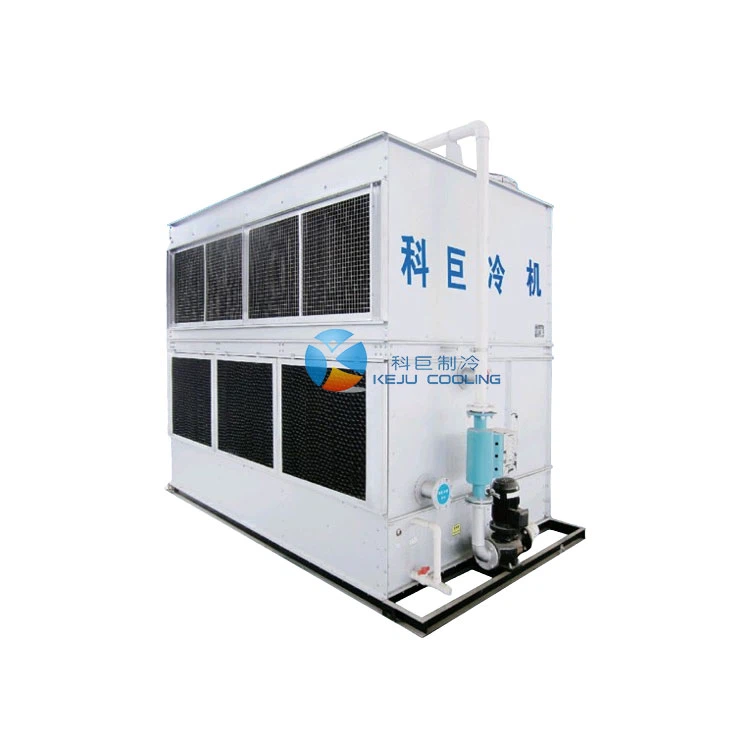
Fill material is a crucial component of countercurrent closed cooling towers. It is typically made of plastic, wood, or metal and is installed inside the tower to provide a large surface area for heat transfer between the hot fluid and the cool air. The primary functions of fill material can be summarized as follows:
1. Enhancing Heat Transfer
The main function of fill material is to increase the contact area between the hot fluid and the cool air, thereby enhancing the heat transfer process. When the hot fluid is sprayed over the fill material, it forms a thin film that spreads out over the surface of the fill. This thin film allows for more efficient heat transfer as the air flowing through the tower comes into contact with a larger surface area of the fluid.
The design and configuration of the fill material play a significant role in determining its heat transfer efficiency. For example, fill materials with a high specific surface area (surface area per unit volume) and a large void fraction (the ratio of void space to total volume) are more effective in promoting heat transfer. Additionally, the shape and orientation of the fill material can also influence the flow pattern of the air and the fluid, further enhancing the heat transfer process.
2. Promoting Evaporation
In addition to enhancing heat transfer, fill material also promotes evaporation of the water in the hot fluid. As the hot fluid spreads out over the surface of the fill, a portion of the water evaporates, absorbing latent heat from the fluid and cooling it down. This evaporation process is a key mechanism for heat removal in countercurrent closed cooling towers, especially in applications where the ambient air is dry.
The evaporation rate is influenced by several factors, including the temperature and humidity of the air, the surface area of the fill material, and the contact time between the fluid and the air. By providing a large surface area for evaporation, fill material helps to increase the evaporation rate and improve the cooling efficiency of the tower.
3. Improving Air Distribution
Fill material also helps to improve the distribution of air inside the cooling tower. As the air flows through the tower, it passes through the fill material, which acts as a baffle to disrupt the flow and create a more uniform distribution of air across the tower. This uniform air distribution ensures that all parts of the fill material are exposed to the air, maximizing the heat transfer efficiency and preventing hot spots from forming.
In addition to improving air distribution, fill material also helps to reduce the pressure drop across the tower. A high pressure drop can increase the energy consumption of the tower's fans and pumps, reducing the overall efficiency of the system. By providing a more uniform flow path for the air, fill material helps to minimize the pressure drop and improve the energy efficiency of the tower.

4. Preventing Fouling and Scaling
Another important function of fill material is to prevent fouling and scaling inside the cooling tower. Fouling refers to the accumulation of dirt, debris, and other contaminants on the surface of the fill material, while scaling refers to the deposition of minerals and salts on the surface of the fill. Both fouling and scaling can reduce the heat transfer efficiency of the tower and increase the energy consumption.
Fill materials are designed to be resistant to fouling and scaling, with smooth surfaces that are easy to clean. Additionally, some fill materials are treated with special coatings or additives to prevent the growth of bacteria and algae, which can also contribute to fouling and scaling.
Types of Fill Material
There are several types of fill material available for countercurrent closed cooling towers, each with its own advantages and disadvantages. The choice of fill material depends on various factors, including the application requirements, the operating conditions, and the budget. Some of the most common types of fill material include:
1. Plastic Fill
Plastic fill is one of the most widely used types of fill material in countercurrent closed cooling towers. It is made of high-density polyethylene (HDPE), polypropylene (PP), or other plastic materials and is available in a variety of shapes and configurations, such as corrugated sheets, grids, and splash bars.
Plastic fill offers several advantages, including high heat transfer efficiency, low cost, and resistance to corrosion and fouling. It is also lightweight and easy to install, making it a popular choice for both new and retrofit applications. However, plastic fill may not be suitable for high-temperature applications or in environments where the fill material is exposed to UV radiation, as it can degrade over time.
2. Wood Fill
Wood fill is another traditional type of fill material that has been used in cooling towers for many years. It is typically made of redwood, cedar, or other rot-resistant woods and is available in the form of slats or blocks.
Wood fill offers good heat transfer efficiency and is relatively inexpensive. It also has a natural ability to resist bacteria and algae growth, making it a good choice for applications where water quality is a concern. However, wood fill requires regular maintenance to prevent rot and decay, and it may not be suitable for applications where the fill material is exposed to high levels of chemicals or abrasion.
3. Metal Fill
Metal fill is a less common type of fill material that is typically used in high-temperature applications or in environments where the fill material is exposed to harsh chemicals or abrasion. It is made of stainless steel, aluminum, or other metal materials and is available in a variety of shapes and configurations, such as fins, tubes, and plates.
Metal fill offers excellent heat transfer efficiency and is highly resistant to corrosion and fouling. It is also durable and can withstand high temperatures and pressures. However, metal fill is more expensive than plastic or wood fill and may require special installation and maintenance procedures.
Conclusion
In conclusion, fill material is a critical component of countercurrent closed cooling towers. It plays a vital role in enhancing heat transfer, promoting evaporation, improving air distribution, and preventing fouling and scaling. The choice of fill material depends on various factors, including the application requirements, the operating conditions, and the budget.
As a supplier of Counter Flow Closed Type Cooling Tower, Closed Type Counterflow Cooling Tower, and Counter Flow Closed Circuit Cooling Tower, we understand the importance of selecting the right fill material for your specific application. Our team of experts can help you choose the most suitable fill material based on your requirements and provide you with high-quality cooling towers that are designed to deliver optimal performance and efficiency.
If you are interested in learning more about our countercurrent closed cooling towers or have any questions about fill material, please feel free to contact us. We would be happy to discuss your needs and provide you with a customized solution that meets your requirements.
References
- ASHRAE Handbook - HVAC Systems and Equipment. American Society of Heating, Refrigerating and Air-Conditioning Engineers, Inc.
- Cooling Tower Institute. Cooling Tower Fundamentals. Cooling Tower Institute.
- Perry's Chemical Engineers' Handbook. McGraw-Hill Education.