

What is the difference between induced draft and forced draft in a counter flow cooling tower?
Sep 03, 2025
In the realm of industrial cooling, counter flow cooling towers play a pivotal role in maintaining optimal temperatures for various processes. As a leading counter flow cooling tower supplier, I've witnessed firsthand the significance of understanding the differences between induced draft and forced draft systems. This knowledge is crucial for making informed decisions when it comes to selecting the most suitable cooling solution for specific applications.
Understanding Counter Flow Cooling Towers
Before delving into the differences between induced draft and forced draft, it's essential to grasp the basic principles of counter flow cooling towers. These towers are designed to facilitate the transfer of heat from a hot fluid, typically water, to the atmosphere. The counter flow design involves the hot water flowing downward through the tower while the air moves upward, creating an efficient heat exchange process.
Counter flow cooling towers are widely used in industries such as power generation, manufacturing, and HVAC systems. They offer several advantages, including high cooling efficiency, compact design, and the ability to handle large volumes of water. There are different types of counter flow cooling towers available in the market, such as the Counter Flow Closed Circuit Cooling Tower, Closed Type Counterflow Cooling Tower, and Counter Flow Closed Type Cooling Tower.
Induced Draft Cooling Towers
Induced draft cooling towers utilize a fan located at the top of the tower to draw air through the tower. This creates a negative pressure inside the tower, causing the air to be pulled in from the bottom and flow upward, counter to the direction of the falling water. The main advantage of induced draft cooling towers is their ability to provide a more uniform air distribution across the tower. This results in better heat transfer efficiency and more consistent cooling performance.
One of the key features of induced draft cooling towers is their relatively quiet operation. Since the fan is located at the top of the tower, the noise generated by the fan is dissipated over a larger area, reducing the overall noise level. Additionally, induced draft cooling towers are less prone to recirculation issues, as the negative pressure helps to prevent the hot, moist air from being drawn back into the tower.
However, induced draft cooling towers also have some limitations. The fan at the top of the tower is exposed to the elements, which can lead to increased maintenance requirements. The fan motor and blades are also more susceptible to damage from debris and corrosion. Furthermore, the installation and maintenance of the fan at the top of the tower can be more challenging and costly compared to forced draft cooling towers.
Forced Draft Cooling Towers
Forced draft cooling towers, on the other hand, use a fan located at the bottom of the tower to push air into the tower. This creates a positive pressure inside the tower, forcing the air to flow upward through the tower. The main advantage of forced draft cooling towers is their simplicity and ease of maintenance. Since the fan is located at the bottom of the tower, it is more accessible for inspection, repair, and replacement.
Forced draft cooling towers are also more suitable for applications where space is limited. The fan at the bottom of the tower allows for a more compact design, making them ideal for installations where there is not enough room for an induced draft cooling tower. Additionally, forced draft cooling towers are less affected by wind conditions, as the positive pressure helps to ensure a consistent air flow through the tower.
However, forced draft cooling towers also have some drawbacks. The air distribution in forced draft cooling towers is generally less uniform compared to induced draft cooling towers. This can result in lower heat transfer efficiency and less consistent cooling performance. Forced draft cooling towers are also more prone to recirculation issues, as the positive pressure can cause the hot, moist air to be pushed back into the tower.
Comparing Induced Draft and Forced Draft Cooling Towers
When comparing induced draft and forced draft cooling towers, several factors need to be considered. These factors include cooling efficiency, noise level, maintenance requirements, space requirements, and cost.
- Cooling Efficiency: Induced draft cooling towers generally offer higher cooling efficiency due to their more uniform air distribution. This results in better heat transfer and more consistent cooling performance. Forced draft cooling towers, on the other hand, may have lower cooling efficiency due to their less uniform air distribution.
- Noise Level: Induced draft cooling towers are typically quieter than forced draft cooling towers. The fan at the top of the tower helps to dissipate the noise over a larger area, reducing the overall noise level. Forced draft cooling towers, with their fan located at the bottom of the tower, may generate more noise.
- Maintenance Requirements: Forced draft cooling towers are generally easier to maintain compared to induced draft cooling towers. The fan at the bottom of the tower is more accessible for inspection, repair, and replacement. Induced draft cooling towers, with their fan located at the top of the tower, may require more specialized equipment and techniques for maintenance.
- Space Requirements: Forced draft cooling towers are more suitable for applications where space is limited. The fan at the bottom of the tower allows for a more compact design. Induced draft cooling towers, with their larger fan at the top of the tower, may require more space.
- Cost: The cost of induced draft and forced draft cooling towers can vary depending on several factors, such as the size, capacity, and features of the tower. In general, induced draft cooling towers may be more expensive due to their higher cooling efficiency and more complex design. Forced draft cooling towers, on the other hand, may be more cost-effective due to their simpler design and lower maintenance requirements.
Selecting the Right Cooling Tower
Selecting the right cooling tower for your specific application is crucial to ensure optimal performance and efficiency. When choosing between an induced draft and forced draft cooling tower, it's important to consider the factors mentioned above, as well as the specific requirements of your application.

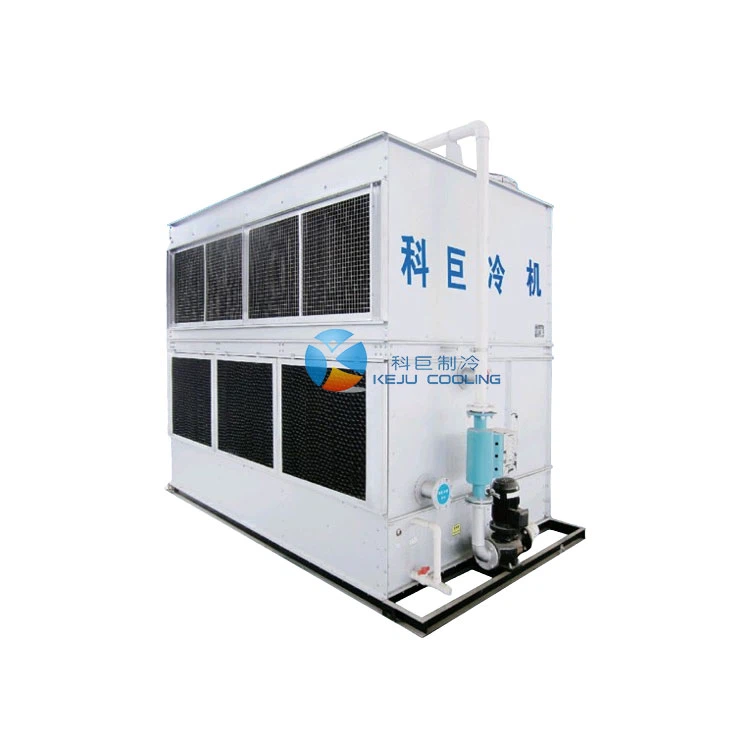
If you require high cooling efficiency, consistent cooling performance, and quiet operation, an induced draft cooling tower may be the best choice. On the other hand, if you have limited space, need a more compact design, and are looking for a cost-effective solution with lower maintenance requirements, a forced draft cooling tower may be more suitable.
As a counter flow cooling tower supplier, we have the expertise and experience to help you select the right cooling tower for your needs. Our team of experts can assess your specific requirements and provide you with customized solutions that meet your budget and performance expectations.
Conclusion
In conclusion, understanding the differences between induced draft and forced draft cooling towers is essential for making informed decisions when it comes to selecting the most suitable cooling solution for your application. Both types of cooling towers have their own advantages and disadvantages, and the choice between them depends on several factors, such as cooling efficiency, noise level, maintenance requirements, space requirements, and cost.
As a counter flow cooling tower supplier, we are committed to providing our customers with high-quality cooling solutions that meet their specific needs. Whether you need an induced draft or forced draft cooling tower, we have the expertise and experience to help you make the right choice. If you are interested in learning more about our counter flow cooling towers or would like to discuss your cooling requirements, please feel free to contact us. We look forward to working with you to find the perfect cooling solution for your application.
References
- ASHRAE Handbook - HVAC Systems and Equipment. American Society of Heating, Refrigerating and Air-Conditioning Engineers.
- Cooling Tower Institute. Cooling Tower Fundamentals.
- McQuiston, F. C., Parker, J. D., & Spitler, J. D. (2005). Heating, Ventilating, and Air Conditioning: Analysis and Design. Wiley.