

What is the blowdown process in a cross flow open loop cooling tower?
Aug 27, 2025
Hey there! As a supplier of Cross Flow Open Loop Cooling Towers, I often get asked about the blowdown process. So, let's dive right in and break down what the blowdown process in a cross flow open loop cooling tower is all about.
Understanding Cross Flow Open Loop Cooling Towers
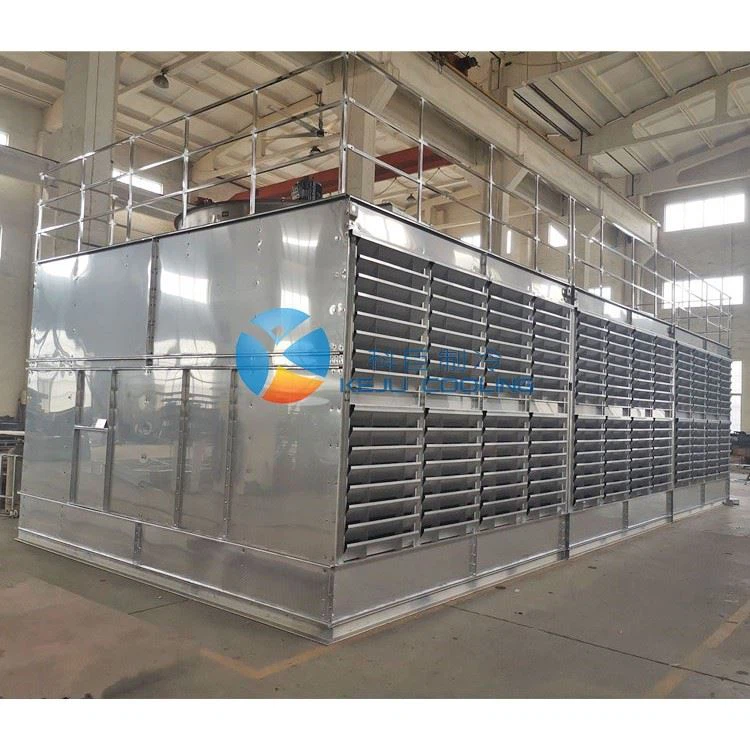
First off, a quick refresher on cross flow open loop cooling towers. In these systems, water and air flow in a cross - direction. The hot water enters at the top of the tower and is distributed over a fill media. Meanwhile, air is drawn horizontally through the fill media by fans. This cross - flow design allows for efficient heat transfer, cooling the water down before it is recirculated back to the process that generated the heat.
You can learn more about different types of cross flow open loop cooling towers on our website. Check out our Cross Flow Open Type Cooling Tower, Steel Open Water Cooling Tower, and Square Crossflow Open Circuit Cooling Tower pages.
What is Blowdown?
Blowdown is a crucial part of the operation of a cross flow open loop cooling tower. When water evaporates in the cooling tower, the dissolved solids in the water don't evaporate with it. Instead, they stay behind in the remaining water. Over time, as more water evaporates, the concentration of these dissolved solids in the cooling water increases. This can lead to a bunch of problems, like scale formation on the heat transfer surfaces, corrosion of the tower components, and the growth of algae and bacteria.
Blowdown is the process of intentionally removing a portion of the concentrated cooling water from the system and replacing it with fresh water. By doing this, we can control the concentration of dissolved solids in the cooling water and keep the system running smoothly.
Why is Blowdown Necessary?
Let's take a closer look at why blowdown is so important.
Scale Formation
As the concentration of dissolved solids increases, minerals like calcium carbonate and calcium sulfate can start to precipitate out of the water and form scale on the heat transfer surfaces. Scale acts as an insulator, reducing the efficiency of heat transfer. This means that the cooling tower has to work harder to achieve the same level of cooling, which can lead to increased energy consumption and higher operating costs. By performing blowdown, we can keep the mineral concentration in check and prevent scale from forming.
Corrosion
High concentrations of dissolved solids can also increase the corrosiveness of the cooling water. Corrosion can damage the tower components, such as the fill media, pipes, and pumps. This not only shortens the lifespan of the equipment but can also lead to leaks and other operational issues. Regular blowdown helps to maintain a lower concentration of corrosive substances in the water, reducing the risk of corrosion.
Biological Growth
The warm, moist environment of a cooling tower is a perfect breeding ground for algae, bacteria, and other microorganisms. These organisms can form slime layers on the heat transfer surfaces, further reducing the efficiency of heat transfer. Some bacteria, like Legionella, can also pose a health risk to humans. Blowdown helps to remove the nutrients and organic matter that these organisms need to grow, keeping the cooling water clean and reducing the risk of biological growth.
How is Blowdown Controlled?
There are a few different ways to control the blowdown process in a cross flow open loop cooling tower.

Cycles of Concentration
One of the most common ways to control blowdown is by monitoring the cycles of concentration (COC). The cycles of concentration is the ratio of the concentration of dissolved solids in the cooling water to the concentration of dissolved solids in the makeup water. For example, if the COC is 3, it means that the concentration of dissolved solids in the cooling water is three times higher than in the makeup water.
By setting a target COC, we can determine when to perform blowdown. When the COC reaches the target value, a certain amount of cooling water is removed from the system, and fresh makeup water is added. The target COC depends on a variety of factors, such as the quality of the makeup water, the type of cooling tower, and the operating conditions.
Conductivity
Another way to control blowdown is by monitoring the conductivity of the cooling water. Conductivity is a measure of the ability of the water to conduct an electrical current, and it is directly related to the concentration of dissolved solids in the water. As the concentration of dissolved solids increases, the conductivity of the water also increases. By installing a conductivity sensor in the cooling water system, we can continuously monitor the conductivity and automatically initiate blowdown when the conductivity reaches a pre - set limit.
Time - Based Control
In some cases, blowdown can be controlled on a time - based schedule. For example, a certain amount of blowdown may be performed at regular intervals, such as once a day or once a week. This method is less precise than using COC or conductivity control, but it can be a simple and cost - effective way to manage blowdown, especially in smaller cooling tower systems.
The Blowdown Process in Action
Let's walk through a typical blowdown process in a cross flow open loop cooling tower.
Step 1: Monitoring
First, we need to monitor the water quality in the cooling tower. This can be done by regularly taking samples of the cooling water and analyzing them for parameters such as dissolved solids, pH, and conductivity. We can also use online sensors to continuously monitor these parameters and get real - time data.
Step 2: Determining the Need for Blowdown
Based on the monitoring results, we can determine whether blowdown is necessary. If the concentration of dissolved solids has reached the target COC or the conductivity has exceeded the pre - set limit, it's time to perform blowdown.
Step 3: Performing Blowdown
When it's time for blowdown, a valve is opened to allow a portion of the concentrated cooling water to flow out of the system. The amount of water removed depends on the target COC and the size of the cooling tower. Once the blowdown is complete, the valve is closed, and fresh makeup water is added to the system to replace the water that was removed.
Step 4: Treatment
After blowdown, it's important to treat the makeup water to ensure that it is suitable for use in the cooling tower. This may involve adding chemicals to adjust the pH, prevent scale formation, and control biological growth.
Challenges and Considerations
While blowdown is an essential part of cooling tower operation, it also comes with some challenges and considerations.
Water Conservation
Blowdown requires the use of fresh water to replace the water that is removed from the system. In areas where water is scarce, this can be a significant concern. To minimize water consumption, we can use advanced water treatment technologies, such as reverse osmosis or ion exchange, to reduce the amount of blowdown required. We can also recycle and reuse the blowdown water for other non - critical applications, such as irrigation or industrial processes.
Disposal of Blowdown Water
The blowdown water contains a high concentration of dissolved solids and other contaminants, so it needs to be disposed of properly. In some cases, the blowdown water can be discharged to a sewer system, but this may require pretreatment to meet the local environmental regulations. In other cases, the blowdown water may need to be treated on - site before it can be disposed of.
Conclusion
In conclusion, the blowdown process is a vital part of the operation of a cross flow open loop cooling tower. By removing a portion of the concentrated cooling water and replacing it with fresh water, we can control the concentration of dissolved solids, prevent scale formation, reduce corrosion, and minimize biological growth. This helps to keep the cooling tower operating efficiently, extends the lifespan of the equipment, and reduces the risk of operational issues.
If you're in the market for a cross flow open loop cooling tower or have any questions about the blowdown process, don't hesitate to reach out. We're here to help you find the best solution for your needs and ensure that your cooling tower operates at its best.
References
- Cooling Tower Institute. (Year). Cooling Tower Fundamentals.
- ASHRAE Handbook - HVAC Systems and Equipment. (Year). American Society of Heating, Refrigerating and Air - Conditioning Engineers.