

What are the components of a steel open water cooling tower?
Aug 08, 2025
Hey there! As a supplier of Steel Open Water Cooling Towers, I'm super excited to share with you all the ins and outs of what makes these cooling towers tick. So, let's dive right in and explore the components that make up a steel open water cooling tower.
1. Structural Frame
The structural frame is like the backbone of the cooling tower. It's made of steel, which is known for its strength and durability. This frame provides the necessary support for all the other components of the cooling tower. It has to be able to withstand various forces, such as wind, the weight of the water and other equipment, and even seismic activity in some areas.
The steel used in the frame is typically hot - dipped galvanized to prevent rust and corrosion. This coating adds an extra layer of protection, ensuring that the frame lasts for a long time, even in harsh environmental conditions. Without a sturdy frame, the entire cooling tower could be at risk of collapsing, so it's a crucial component.
2. Fill Material
The fill material is where a significant part of the cooling process takes place. It's designed to increase the surface area of the water as it flows through the cooling tower. This increased surface area allows for more efficient heat transfer between the hot water and the air.
There are different types of fill materials available. Some are made of PVC (polyvinyl chloride), while others are made of wood or metal. PVC fill is quite popular because it's lightweight, corrosion - resistant, and easy to install. The fill is arranged in a way that creates a maze - like structure, forcing the water to spread out and come into contact with as much air as possible.
When the hot water trickles down through the fill material, it gets exposed to the air that is being drawn through the tower. As a result, the water cools down as it loses heat to the air. This is a key step in the overall cooling process of the open water cooling tower.
3. Drift Eliminators
Drift eliminators are an important component that helps to prevent water droplets from being carried out of the cooling tower by the exhaust air. When the air passes through the tower and picks up moisture from the water, there's a risk that some of the water droplets could be carried away. This is not only a waste of water but can also cause problems in the surrounding environment, such as corrosion of nearby equipment or the growth of mold.
Drift eliminators work by creating a tortuous path for the air. As the air with the water droplets passes through the drift eliminators, the droplets are forced to collide with the surfaces of the eliminators. Once they collide, the droplets coalesce and fall back into the cooling tower, where they can be reused in the cooling process.
4. Fans
Fans play a crucial role in the operation of a steel open water cooling tower. They are responsible for moving air through the tower. There are two main types of fans used in cooling towers: axial fans and centrifugal fans.
Axial fans are commonly used because they are efficient at moving large volumes of air at relatively low pressures. They work by drawing air in parallel to the axis of the fan blades. These fans are usually located at the top of the cooling tower and are used to exhaust the warm, moist air out of the tower.
Centrifugal fans, on the other hand, are better at generating higher pressures. They are often used in situations where the cooling tower has a more complex air - flow path or when there are restrictions in the air - intake or exhaust areas.

The fans are powered by electric motors, and their speed can be adjusted depending on the cooling requirements of the system. For example, if the hot water temperature is higher, the fans may need to run at a higher speed to increase the air - flow and enhance the cooling efficiency.
5. Water Distribution System
The water distribution system is responsible for evenly distributing the hot water across the fill material. It consists of pipes, nozzles, and headers. The hot water enters the cooling tower through the inlet pipe and is then directed to the headers.
The headers are large pipes that distribute the water to smaller pipes, which are equipped with nozzles. The nozzles are designed to spray the water in a fine mist or a series of droplets over the fill material. An even distribution of water is essential to ensure that all parts of the fill material are used effectively for heat transfer.
If the water is not distributed evenly, some areas of the fill may receive too much water, while others may receive too little. This can lead to inefficient cooling and may even cause dry spots in the fill, which can reduce the overall performance of the cooling tower.
6. Basin
The basin is located at the bottom of the cooling tower. It collects the cooled water that has passed through the fill material. The basin is usually made of steel and is designed to hold a certain volume of water.
It has a drain valve that can be used to empty the basin for maintenance or in case of an emergency. The basin also has an overflow pipe to prevent the water from overflowing if the water level gets too high.
In addition, the basin may have a water treatment system. This system is used to treat the water to prevent the growth of algae, bacteria, and scale. By keeping the water clean and free from contaminants, the performance and lifespan of the cooling tower can be improved.
7. Louvers
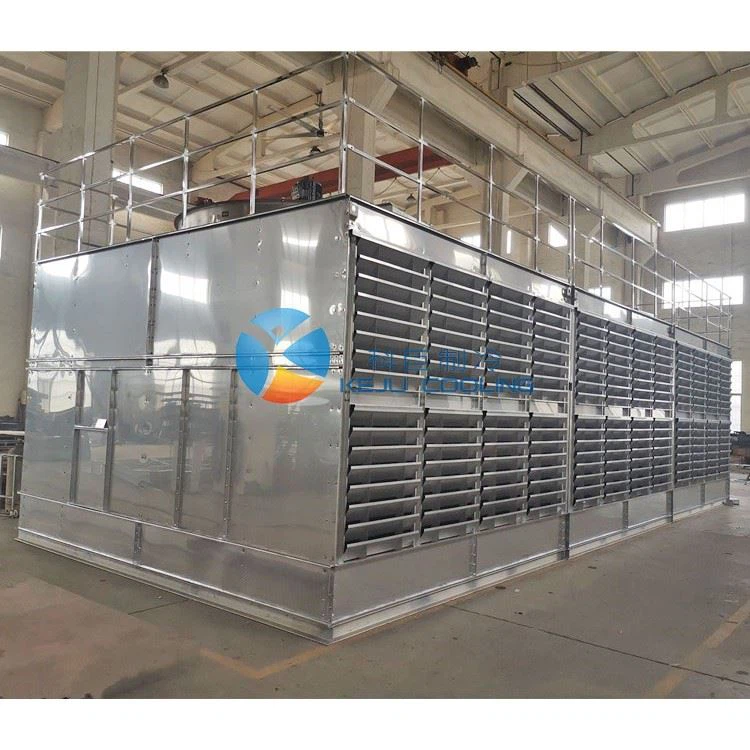
Louvers are installed on the sides of the cooling tower. They serve several purposes. Firstly, they help to control the amount of air that enters the tower. By adjusting the angle of the louvers, the air - intake rate can be regulated.
Secondly, louvers protect the internal components of the cooling tower from external elements such as rain, snow, and debris. They prevent large objects from entering the tower and potentially damaging the fill material, fans, or other components.
There are different types of louvers available, such as fixed louvers and adjustable louvers. Adjustable louvers offer more flexibility in controlling the air - flow, as their angle can be changed according to the operating conditions of the cooling tower.
Our Product Offerings
At our company, we offer a range of high - quality steel open water cooling towers. For example, we have the Square Crossflow Open Circuit Cooling Tower. This type of cooling tower is known for its efficient cross - flow design, which allows for excellent heat transfer and cooling performance.
We also have the Cross Flow Steel Open Cooling Tower. It's a reliable option for various industrial applications, with a sturdy steel construction and advanced components.
And if you're looking for a more specific solution, our Steel Crossflow Open Cooling Tower is designed to meet the highest standards of quality and performance.
Contact Us for Procurement
If you're in the market for a steel open water cooling tower, we'd love to hear from you. Whether you have a small - scale industrial application or a large - scale commercial project, we can provide you with the right cooling tower solution. Our team of experts can help you choose the best components and configuration based on your specific requirements. So, don't hesitate to reach out and start the procurement process with us.
References
- Cooling Tower Institute. (20XX). Cooling Tower Handbook.
- ASHRAE. (20XX). Handbook of HVAC Systems and Equipment.