

What kind of water quality is required for an open circuit evaporative cooling tower?
Aug 15, 2025
Hey there! I'm a supplier of Open Circuit Evaporative Cooling Towers. Over the years, I've gotten tons of questions from customers about the water quality these cooling towers need. So, I thought I'd write this blog to share what I've learned.

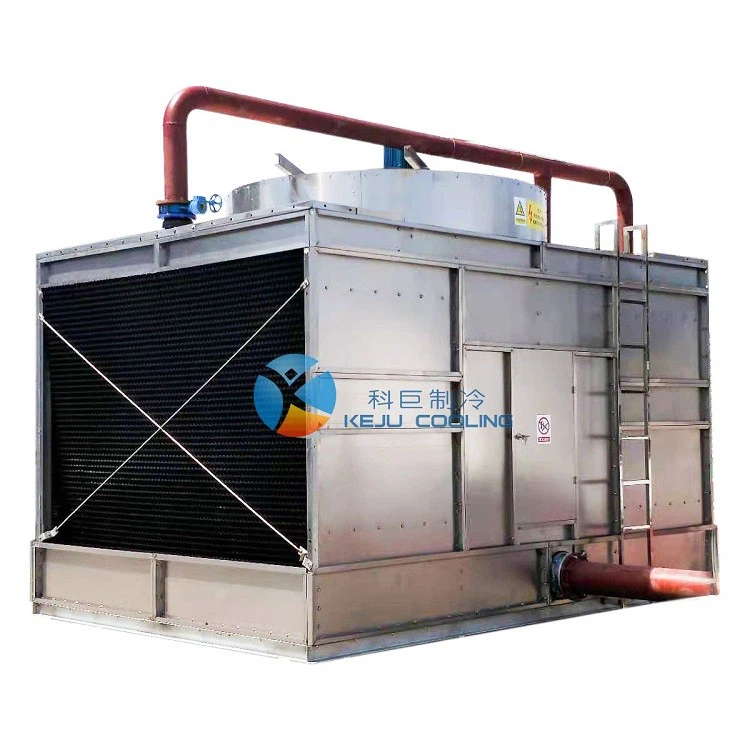
First off, let's talk about why water quality matters so much for open circuit evaporative cooling towers. These cooling towers work by evaporating a portion of the water to remove heat. The water that doesn't evaporate gets recirculated. If the water quality is bad, it can lead to all sorts of problems like scale buildup, corrosion, and the growth of harmful microorganisms.
1. Total Dissolved Solids (TDS)
TDS refers to the amount of inorganic and organic substances dissolved in water. In an open circuit evaporative cooling tower, as water evaporates, the concentration of TDS in the remaining water increases. High TDS levels can cause scale to form on the heat transfer surfaces of the cooling tower. Scale acts as an insulator, reducing the efficiency of heat transfer. This means the cooling tower has to work harder to achieve the same cooling effect, which can lead to higher energy consumption.
Ideally, the TDS level in the makeup water (the water added to replace the evaporated water) should be kept below 1500 - 2000 ppm (parts per million). If the TDS level in the makeup water is high, you might need to use water treatment methods like reverse osmosis or ion exchange to reduce it.
2. pH Level
The pH level of the water is another crucial factor. A pH range of 6.5 - 8.5 is generally recommended for open circuit evaporative cooling towers. If the pH is too low (acidic), it can cause corrosion of the metal components in the cooling tower, such as the pipes and the cooling tower structure. On the other hand, if the pH is too high (alkaline), it can lead to scale formation.
To maintain the proper pH level, you can use pH adjusters. For example, if the pH is too low, you can add a base like sodium hydroxide. If the pH is too high, an acid like sulfuric acid can be added. However, you need to be careful when adding these chemicals, as over - dosing can cause more problems than it solves.
3. Hardness
Water hardness is mainly caused by the presence of calcium and magnesium ions. High - hardness water can lead to scale formation, especially when the water is heated or evaporated. In an open circuit evaporative cooling tower, the evaporation process concentrates the hardness ions, increasing the likelihood of scale buildup.
There are two types of water hardness: temporary and permanent. Temporary hardness can be removed by boiling the water, while permanent hardness requires more advanced treatment methods. For cooling towers, it's best to keep the hardness level in the makeup water below 200 - 300 ppm as calcium carbonate equivalent. If the hardness is too high, you can use water softeners or chemical additives to prevent scale formation.
4. Microbiological Contamination
Microorganisms like bacteria, algae, and fungi can grow in the water of open circuit evaporative cooling towers. These microorganisms can cause several problems. For example, bacteria can form biofilms on the heat transfer surfaces, reducing the efficiency of heat transfer. Some bacteria, like Legionella, can also pose a serious health risk to humans if the contaminated water is aerosolized and inhaled.
To control microbiological contamination, you can use biocides. There are two main types of biocides: oxidizing and non - oxidizing. Oxidizing biocides, such as chlorine and bromine, work by killing the microorganisms through oxidation. Non - oxidizing biocides, on the other hand, work by disrupting the cell membranes or metabolic processes of the microorganisms.
5. Suspended Solids
Suspended solids are particles that are suspended in the water and do not dissolve. These can include dirt, sand, rust, and other debris. High levels of suspended solids can cause abrasion of the pump impellers and other moving parts in the cooling tower system. They can also accumulate on the heat transfer surfaces, reducing the efficiency of heat transfer.
To remove suspended solids, you can use filtration systems. There are different types of filters available, such as sand filters, cartridge filters, and multimedia filters. The choice of filter depends on the size and nature of the suspended solids.
Now, let me introduce some of our great products. We offer a variety of open circuit evaporative cooling towers, including the Crossflow Open Type Cooling Tower. This type of cooling tower has a unique cross - flow design, which allows for efficient heat transfer and easy maintenance.
Another popular product is the Open Circuit Cross Flow Square Cooling Tower. It has a square shape, which makes it suitable for installations where space is limited. It also offers high cooling efficiency and low energy consumption.
We also have the Steel Crossflow Open Cooling Tower. Made of high - quality steel, this cooling tower is durable and can withstand harsh environmental conditions.
If you're in the market for an open circuit evaporative cooling tower, it's important to pay attention to the water quality requirements. By maintaining the right water quality, you can ensure the long - term performance and efficiency of your cooling tower. And if you have any questions or are interested in our products, don't hesitate to reach out. We're here to help you find the best cooling tower solution for your needs and guide you through the water treatment process to keep your cooling tower running smoothly.
References
- ASHRAE Handbook - HVAC Systems and Equipment
- Cooling Tower Institute (CTI) Standards
- Water Treatment Handbook for Industrial Cooling Systems