

What is the impact of water velocity on the cooling efficiency of a Square Cross Flow Open Cooling Tower?
Jan 21, 2026
What is the impact of water velocity on the cooling efficiency of a Square Cross Flow Open Cooling Tower?
As a supplier of Square Cross Flow Open Cooling Towers, I've often delved into the intricate relationship between various operational parameters and the overall performance of these cooling behemoths. One such crucial factor that significantly affects the cooling efficiency is the water velocity.
The Basics of Square Cross Flow Open Cooling Towers
Before we explore the impact of water velocity, let's briefly understand the workings of a Square Crossflow Open Circuit Cooling Tower. In a cross - flow design, the water flows vertically downwards through the fill media, while the air moves horizontally across the water flow. This counter - acting flow pattern allows for efficient heat transfer between the hot water and the cooler air. The open - circuit nature means that the water is in direct contact with the atmosphere, facilitating the evaporation process, which is a major contributor to the cooling effect.
The Role of Water Velocity in Heat Transfer
Water velocity plays a pivotal role in determining the rate of heat transfer within the cooling tower. A higher water velocity means that more water is passing through the cooling tower per unit of time. This increased water mass flow can enhance the heat transfer process to a certain extent. When the water moves faster, it exposes more water surface area to the air, allowing for greater contact between the water and the air. This increased contact area promotes more efficient heat exchange, as heat can transfer more readily from the water to the air.
However, there is a limit to the benefits of high water velocity. If the water velocity is too high, it can cause the water to flow through the fill media too quickly. As a result, the water may not have enough time to fully interact with the air, and the evaporation process may be hindered. Evaporation is a key mechanism in cooling tower operation, as it requires latent heat from the water, thereby reducing its temperature. When high - velocity water rushes through the fill without proper evaporation, the cooling efficiency drops.
Effect on Air - Water Interaction
The water velocity also affects the interaction between the air and the water droplets. In an ideal scenario, the water should break up into small droplets as it passes through the fill media. These small droplets have a larger surface - to - volume ratio, which is beneficial for heat transfer and evaporation. When the water velocity is low, the water may not break up effectively, and large droplets may form. These large droplets have a smaller surface - to - volume ratio, reducing the efficiency of heat transfer and evaporation.
On the other hand, extremely high water velocities can cause the air to be unable to effectively penetrate the water flow. The air needs to come into close contact with the water droplets to absorb heat and moisture. If the water is moving too fast, the air may be deflected or unable to mix properly with the water, leading to a less efficient cooling process.
Impact on Fill Media Performance
The fill media in a Square Cross Flow Open Cooling Tower is designed to provide a large surface area for heat and mass transfer. The water velocity can have a significant impact on the performance of the fill media. At an optimal water velocity, the water evenly wets the fill media, creating a continuous film of water. This film allows for efficient heat transfer between the water and the air flowing through the fill.
If the water velocity is too low, the water may not spread evenly across the fill media. Some parts of the fill may remain dry, reducing the effective surface area available for heat transfer. Conversely, a very high water velocity can cause the water to flood the fill media. This flooding can block the air passages, preventing the proper flow of air and reducing the cooling efficiency.
Finding the Optimal Water Velocity
Determining the optimal water velocity for a Square Cross Flow Open Cooling Tower requires a careful balance. It depends on several factors, including the design of the cooling tower, the type of fill media used, and the ambient conditions. Generally, a water velocity range of 0.5 - 2.0 m/s is considered optimal for most cross - flow cooling towers.
To find the exact optimal velocity for a specific application, it is essential to conduct detailed testing and analysis. This may involve measuring the inlet and outlet water temperatures, the air flow rate, and the humidity levels. Computational Fluid Dynamics (CFD) simulations can also be used to model the flow of water and air within the cooling tower and predict the performance at different water velocities.
Real - World Implications for Cooling Tower Users
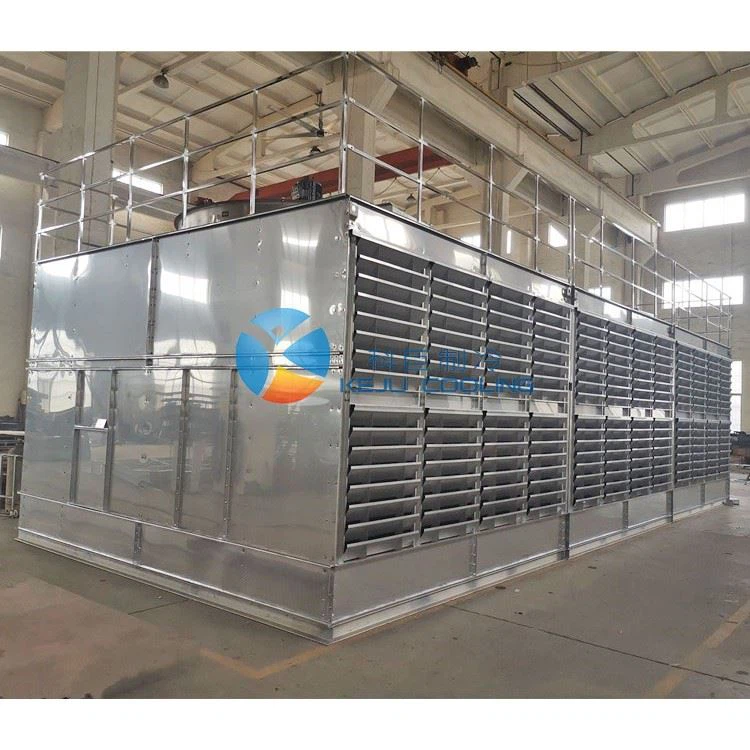

For users of Steel Open Water Cooling Tower or Crossflow Open Type Cooling Tower, understanding the impact of water velocity on cooling efficiency is crucial. Incorrect water velocity settings can lead to increased energy consumption, as the cooling tower may need to operate for longer periods or at higher power levels to achieve the desired cooling effect.
In addition, improper water velocity can cause premature wear and tear on the cooling tower components. For example, high - velocity water can erode the fill media, reducing its effectiveness over time. It can also cause increased stress on the pumps and other mechanical components, leading to more frequent maintenance and repairs.
Contact Us for Optimal Cooling Solutions
If you are in the market for a Square Cross Flow Open Cooling Tower or need assistance in optimizing the performance of your existing cooling tower, we are here to help. Our team of experts has extensive experience in designing and operating cooling towers, and we can provide you with customized solutions based on your specific requirements.
We understand the importance of water velocity and other operational parameters in achieving maximum cooling efficiency. By working with us, you can ensure that your cooling tower operates at its peak performance, saving you energy and reducing your operating costs. Contact us today to start a discussion about your cooling needs and explore the possibilities of a more efficient cooling solution.
References
- ASHRAE Handbook - HVAC Systems and Equipment. American Society of Heating, Refrigerating and Air - Conditioning Engineers.
- Cooling Tower Institute (CTI) Standards. Cooling Tower Institute.
- Incropera, F. P., & DeWitt, D. P. (2002). Fundamentals of Heat and Mass Transfer. John Wiley & Sons.