

What is the impact of altitude on a Crossflow Open Type Cooling Tower?
Aug 05, 2025
Hey there! As a supplier of Crossflow Open Type Cooling Towers, I've gotten a lot of questions about how altitude can affect these cooling towers. So, I thought I'd take a few minutes to break it down for you.
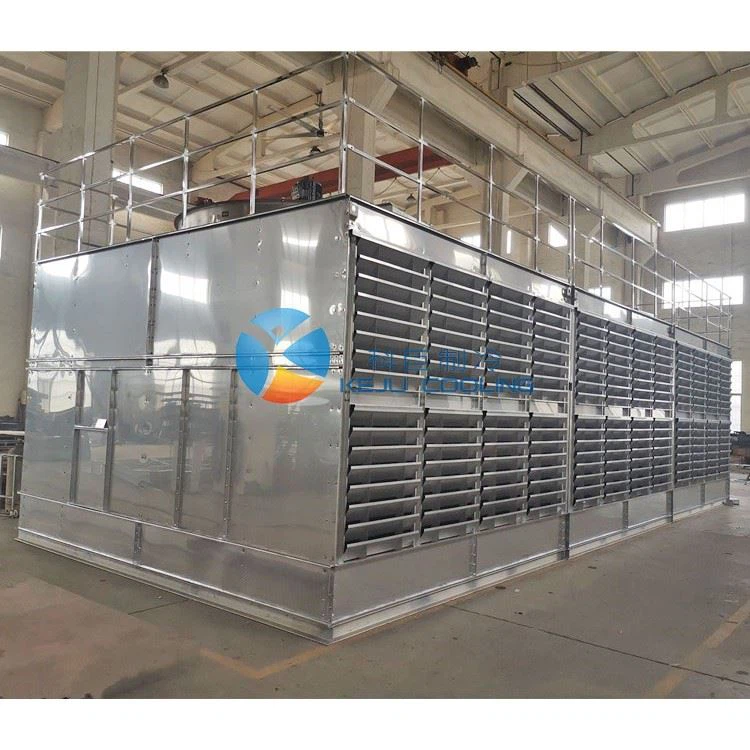
First off, let's talk a bit about what a Crossflow Open Type Cooling Tower is. These bad boys are pretty popular in a bunch of industries, like power generation, HVAC, and manufacturing. They work by allowing air to flow horizontally across a vertically flowing stream of water. This cross - flow design helps in efficient heat transfer, cooling down the water that's used in industrial processes or HVAC systems. If you want to learn more about them, you can check out this link: Cross Flow Open Type Cooling Tower.
Now, let's dive into the impact of altitude on these cooling towers. Altitude mainly affects two key aspects: air density and barometric pressure.

Air Density
As you go up in altitude, the air density decreases. You might be thinking, "So what? How does that matter for a cooling tower?" Well, air density plays a huge role in the heat transfer process. In a crossflow open - type cooling tower, the air is used to remove heat from the water. When the air is less dense, there are fewer air molecules available to carry away the heat.
Let me give you an analogy. Think of air molecules as little trucks that carry heat. At lower altitudes, there are a lot of these trucks on the road, so they can quickly pick up and carry away the heat from the water. But at higher altitudes, there are fewer trucks. This means that the heat transfer rate slows down.
When the heat transfer rate slows down, the cooling tower has a harder time reaching the desired water temperature. In other words, it becomes less efficient. For example, if you have a cooling tower that's designed to cool water from 40°C to 30°C at sea - level, at a high altitude, it might only be able to cool the water to 32°C or 33°C.
Barometric Pressure
Barometric pressure also drops as altitude increases. This decrease in pressure affects the evaporation process in the cooling tower. Evaporation is a key part of how a crossflow open - type cooling tower works. When water evaporates, it takes heat away from the remaining water, cooling it down.
Lower barometric pressure makes it easier for water to evaporate. Sounds good, right? Well, it's a double - edged sword. While it's true that more water will evaporate at higher altitudes due to the lower pressure, this also means that more water is lost from the system.
In a cooling tower, water is a precious resource. You don't want to lose too much of it because it needs to be constantly replenished. Excessive evaporation at high altitudes can lead to increased water consumption and higher operating costs.
Another issue related to barometric pressure is the impact on the fan performance. The fans in a crossflow open - type cooling tower are designed to move a certain volume of air at a specific pressure. When the barometric pressure is lower, the fans have to work harder to move the same amount of air. This can lead to increased energy consumption and potentially more wear and tear on the fans.
Impact on Tower Design and Sizing
All these altitude - related factors mean that when you're installing a crossflow open - type cooling tower at a high altitude, you need to take them into account during the design and sizing process.
If you're in an area with a high altitude, you might need a larger cooling tower to achieve the same cooling capacity as a tower at sea - level. A larger tower provides more surface area for the air - water contact, compensating for the reduced heat transfer efficiency due to lower air density.
For instance, a small Square Crossflow Open Circuit Cooling Tower that works great at sea - level might not be sufficient at a high altitude. You may need to upgrade to a larger Open Circuit Cross Flow Square Cooling Tower to meet your cooling needs.
Solutions and Mitigations
So, what can you do if you're operating a crossflow open - type cooling tower at a high altitude?
- Optimize Fan Selection: You can choose fans that are designed to perform better at lower air densities and pressures. Some fans are specifically engineered to maintain their efficiency in high - altitude conditions.
- Increase Tower Size: As I mentioned earlier, a larger tower can help compensate for the reduced heat transfer efficiency. This might require a higher upfront cost, but it can save you money in the long run by ensuring better performance.
- Water Management: Implement a good water management system to deal with the increased evaporation. You can use water treatment chemicals to reduce scaling and corrosion, and also consider recycling the water as much as possible.
Conclusion
Altitude has a significant impact on crossflow open - type cooling towers. The decrease in air density and barometric pressure affects the heat transfer rate, evaporation process, and fan performance. But with proper design, sizing, and mitigation strategies, you can still have an effective cooling tower at high altitudes.
If you're in the market for a crossflow open - type cooling tower, whether it's for a high - altitude location or not, we're here to help. We have a wide range of cooling towers that can be customized to meet your specific needs. Don't hesitate to reach out to us for more information or to start a procurement discussion. We'd love to work with you to find the perfect cooling solution for your business.
References
- "Cooling Tower Fundamentals" by the Cooling Technology Institute.
- "Thermodynamics and Heat Transfer" textbooks for general principles related to air density, barometric pressure, and heat transfer.