

What is the function of the louvers in an open circuit cooling tower?
Jan 02, 2026
Hey there! As a supplier of open circuit cooling towers, I often get asked about the different components and their functions. One such component that plays a crucial role is the louvers. So, let's dive into what the function of the louvers in an open circuit cooling tower is.
What Are Louvers in an Open Circuit Cooling Tower?
Before we talk about their function, let's quickly understand what louvers are. Louvers are a set of angled slats or blades installed in the cooling tower. They're usually placed on the sides or in specific areas of the tower. You can think of them as little adjustable barriers that control the flow of air and water in and out of the tower.
Controlling Airflow
One of the primary functions of louvers in an open circuit cooling tower is to control the airflow. In an open circuit cooling tower, the cooling process relies on the interaction between hot water and cool air. The louvers help in regulating the amount of air that enters the tower.
If the louvers are adjusted to a wider opening, more air can flow into the tower. This increased airflow can enhance the cooling efficiency because more cool air can come into contact with the hot water. On the other hand, if the cooling load is lower or if the ambient air conditions are not ideal, the louvers can be adjusted to a narrower opening. This restricts the airflow, preventing excessive cooling and ensuring that the tower operates at an optimal level.
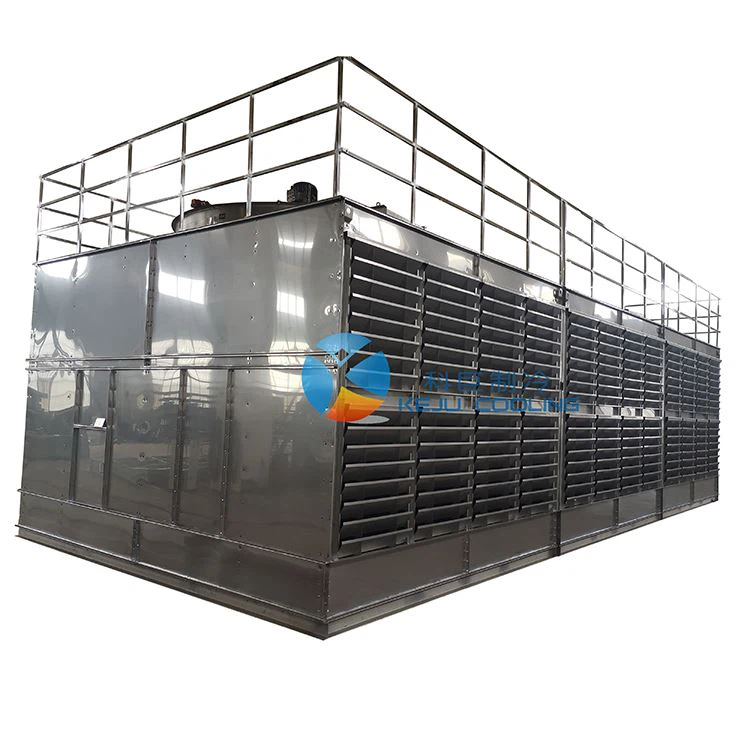

For example, on a hot and humid day, you might want to open the louvers wider to let in more fresh air. This fresh air helps in evaporating more water from the hot water stream, which in turn cools the water more effectively. Conversely, on a cold day, closing the louvers a bit can prevent the water from getting too cold and potentially freezing in the tower.
Preventing Water Splash-Out
Another important function of the louvers is to prevent water splash-out. In an open circuit cooling tower, water is sprayed or distributed over the fill material to increase the surface area for heat transfer. As the water falls through the tower, there's a chance that some of it can splash out of the tower, especially if there's strong wind or high water flow.
The louvers act as a barrier to catch this splashing water. Their angled design redirects the water back into the tower, ensuring that most of the water stays within the cooling system. This not only helps in conserving water but also prevents any potential damage to the surrounding area due to water spillage.
Imagine if there were no louvers in a cooling tower. The water splashing out could cause slippery surfaces around the tower, leading to safety hazards for workers. It could also cause water damage to nearby equipment or buildings. So, the louvers are like a safety net for the water in the cooling tower.
Protecting the Tower Internals
Louvers also play a role in protecting the internal components of the cooling tower. They act as a filter for large debris such as leaves, branches, or dust particles. When the air enters the tower through the louvers, these larger particles get caught on the louver blades, preventing them from entering the tower and potentially clogging the fill material, nozzles, or pipes inside.
If debris were to enter the cooling tower, it could reduce the efficiency of the cooling process. For instance, if the fill material gets clogged, the water distribution will be uneven, and the heat transfer between the water and air will be affected. By keeping the debris out, the louvers help in maintaining the proper functioning of the cooling tower and reducing the need for frequent maintenance.
Different Types of Cooling Towers and Louvers
There are various types of open circuit cooling towers, and the design and function of the louvers can vary slightly depending on the type. For example, Square Cross Flow Open Cooling Tower typically has louvers designed to optimize the cross-flow of air and water. In a cross-flow tower, the air flows horizontally through the fill material while the water flows vertically. The louvers on a square cross-flow open cooling tower are adjusted to ensure that the air enters the tower in a way that maximizes the contact with the falling water.
Similarly, the Open Circuit Cross Flow Square Cooling Tower also relies on louvers to manage the airflow and water splash. The square shape of the tower allows for a specific arrangement of the louvers to enhance the cooling performance. The louvers are strategically placed to direct the air towards the areas where the water is being sprayed, improving the overall heat transfer process.
The Open Circuit Evaporative Cooling Tower uses evaporation as the main cooling mechanism. The louvers in this type of tower are crucial for controlling the airflow to ensure that the right amount of evaporation occurs. They help in maintaining the proper humidity levels inside the tower and prevent excessive evaporation, which could lead to water loss and increased operating costs.
Impact on Cooling Tower Performance
The proper functioning of the louvers has a significant impact on the overall performance of the open circuit cooling tower. If the louvers are not adjusted correctly or if they're damaged, it can lead to several issues.
For example, if the louvers are stuck in a closed position, the airflow into the tower will be restricted. This can cause the water to not cool down enough, leading to higher water temperatures. Higher water temperatures can affect the performance of the equipment that the cooling tower is serving, such as industrial processes or HVAC systems.
On the other hand, if the louvers are too wide open, it can cause excessive water evaporation. This not only leads to water wastage but can also increase the concentration of dissolved solids in the remaining water. High concentrations of solids can cause scaling and corrosion inside the tower, which can damage the internal components and reduce the lifespan of the cooling tower.
Maintenance of Louvers
To ensure that the louvers perform their functions effectively, regular maintenance is essential. This includes inspecting the louvers for any signs of damage, such as bent or broken slats. If any damage is found, the damaged louvers should be replaced promptly to prevent any negative impact on the cooling tower performance.
Cleaning the louvers is also important. Over time, dirt, dust, and other debris can accumulate on the louver blades, which can restrict the airflow. Using a mild detergent and water, the louvers can be gently cleaned to remove any buildup.
Conclusion
In conclusion, the louvers in an open circuit cooling tower are a vital component. They control the airflow, prevent water splash-out, protect the tower internals, and have a direct impact on the overall performance of the cooling tower. Whether you're using a Square Cross Flow Open Cooling Tower, an Open Circuit Cross Flow Square Cooling Tower, or an Open Circuit Evaporative Cooling Tower, the proper functioning of the louvers is crucial for efficient and cost-effective operation.
If you're in the market for an open circuit cooling tower or need more information about the components like louvers, feel free to reach out. I'd be happy to discuss your requirements and help you find the perfect cooling tower solution for your needs.
References
- Cooling Tower Institute Handbook
- Industrial Cooling Technology: Principles and Practices