What is the function of the cooling tower?
Jan 22, 2025
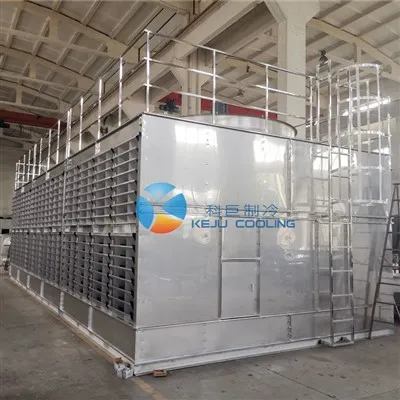
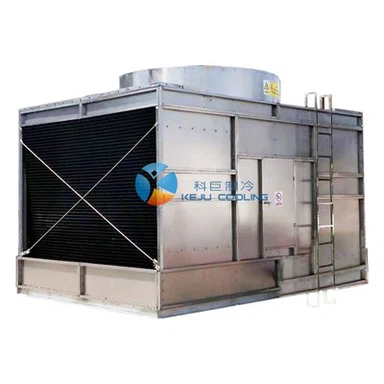
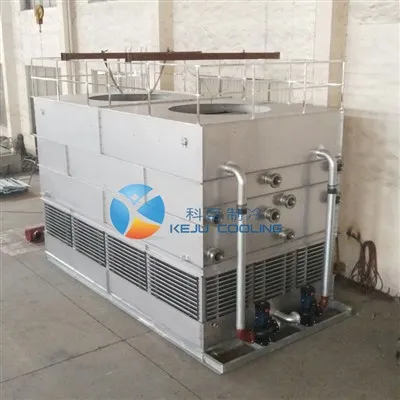
A cooling tower is a crucial equipment used to dissipate waste heat into the atmosphere by cooling a water stream to a lower temperature. Its main functions and working principles are as follows:
Core Function: Heat Removal
The primary role of a cooling tower is to cool down water that has absorbed heat from industrial processes or mechanical systems (e.g., power plants, air conditioning systems, chemical reactors). Reducing the water temperature, allows the water to be reused, forming a closed-loop cooling system that saves water resources and energy.
Working Principle: Heat Exchange Through Evaporation
Cooling towers achieve heat dissipation through the evaporation of water. Here's a detailed breakdown:
* Water Circulation: Hot water from the system is pumped to the top of the cooling tower and distributed through nozzles or spray systems, forming small water droplets or thin water films.
* Contact with Air: As the water falls, it interacts with air (either driven by fans or natural convection). A large surface area (enhanced by fill materials inside the tower) maximizes the contact between water and air.
* Evaporation and Heat Loss: A small portion of the water (usually 1–3%) evaporates, absorbing heat from the remaining water and lowering its temperature. The evaporated water (as steam) is released into the atmosphere, while the cooled water collects at the bottom of the tower and is recycled back into the system.
Key Applications in Different Industries
* Power Generation: Cooling towers cool water used in steam turbines to condense steam back into water, which is then reused in the boiler. This is critical for thermal power plants, nuclear power plants, etc.
* Industrial Processes: In manufacturing (e.g., chemical, petrochemical, and pharmaceutical industries), they cool equipment like reactors, compressors, and heat exchangers to maintain optimal operating temperatures.
* HVAC Systems: In large buildings (e.g., offices, hospitals, data centers), cooling towers support air conditioning systems by cooling the condenser water in chillers, which helps maintain indoor comfort.
* Manufacturing and Engineering: They are used in processes like steel production, refrigeration, and plastic molding to prevent equipment overheating and ensure product quality.
Additional Functions and Benefits
* Water Conservation: By recycling water instead of discharging it, cooling towers reduce water consumption, which is especially important in water-scarce regions.
* Energy Efficiency: Efficient heat dissipation minimizes the energy required to maintain cooling, contributing to overall system efficiency.
* Environmental Impact: Compared to direct water discharge, cooling towers reduce the thermal pollution of natural water bodies (e.g., rivers or lakes) by cooling water before reuse.
Types of Cooling Towers
Different designs suit various needs:
* Natural Draft vs. Forced Draft: Natural draft towers use buoyancy from hot air rising, while forced draft towers use fans to push or pull air.
* Open Circuit vs. Closed Circuit: Open towers expose water directly to air (most common), while closed towers use a separate heat exchanger to prevent water contamination.
* Cross-Flow vs. Counter-Flow: In cross-flow towers, air flows horizontally across falling water; in counter-flow towers, air flows upward against the downward water, enhancing heat transfer efficiency.
In essence, cooling towers serve as vital heat rejection systems, enabling industries and infrastructure to operate efficiently by recycling cooled water. Their design and function are tailored to balance heat dissipation, water usage, and energy efficiency, making them indispensable in numerous sectors.
https://www.kejucooling.com/