

What are the environmental impacts of using a counter flow closed water cooling tower?
Aug 25, 2026
Hey there! As a supplier of Counter Flow Closed Water Cooling Towers, I've seen firsthand how these machines play a big role in various industries. But like any piece of equipment, they have an impact on the environment. Let's dive into what those environmental impacts are.
Water Usage
One of the most significant aspects of a counter flow closed water cooling tower is its water consumption. Unlike open cooling towers, closed - loop systems are designed to recycle water. In an open cooling tower, water is constantly exposed to the atmosphere, and a large amount of it evaporates. This evaporation not only leads to water loss but also requires continuous replenishment.
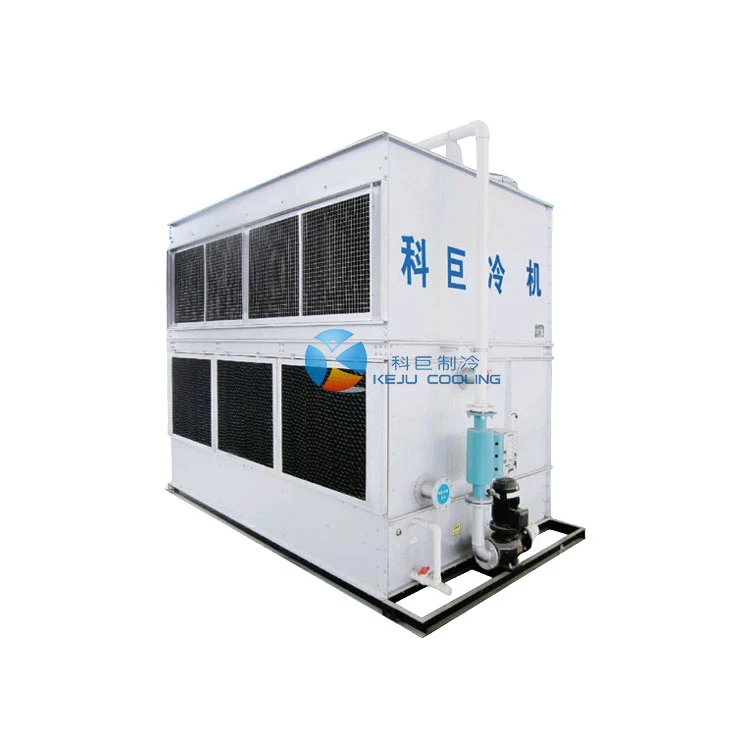
In a Counter Flow Closed Cooling Tower, the water is contained within a closed loop. The heat transfer occurs through a heat exchanger, and the water is cooled by air flowing in the opposite direction (counter - flow). This means that the amount of water lost due to evaporation is significantly reduced. It's a win for the environment, especially in regions where water is scarce.
However, it's not a zero - water - loss system. There is still some minor water loss due to drift, which is the small droplets of water that are carried away by the air stream. But compared to open cooling towers, the drift loss in a counter flow closed water cooling tower is much lower. Regular maintenance, such as checking the drift eliminators, can further minimize this loss.
Energy Consumption
Energy is another area where counter flow closed water cooling towers have an environmental impact. These cooling towers rely on fans to move air through the system. The energy required to run these fans can be substantial, depending on the size and capacity of the tower.
But here's the good news. Modern counter flow closed water cooling towers are designed with energy - efficient features. For example, they use high - efficiency motors and variable - speed drives. The variable - speed drives allow the fans to adjust their speed based on the cooling demand. So, when the cooling load is low, the fans can run at a lower speed, consuming less energy.
Moreover, the closed - loop design of these cooling towers reduces the overall energy consumption compared to open systems. Since the water is not constantly evaporating, there is no need to heat the make - up water to replace the evaporated water. This results in significant energy savings over time.
Chemical Usage
In any cooling system, chemicals are often used to prevent corrosion, scale formation, and microbial growth. In a counter flow closed water cooling tower, the chemical usage is generally lower compared to open cooling towers.
In an open system, the water is exposed to the atmosphere, which means it can pick up various contaminants. To keep the water clean and prevent problems, a higher amount of chemicals is required. In a Closed Type Counterflow Cooling Tower, the closed - loop design reduces the exposure to external contaminants. As a result, less chemical treatment is needed.
However, it's still important to use the right chemicals in the right amounts. Over - using chemicals can have a negative impact on the environment. When the water is eventually discharged, the chemicals can find their way into water bodies, potentially harming aquatic life. So, proper chemical management is crucial.
Noise Pollution
The fans and pumps in a counter flow closed water cooling tower can generate noise. This can be a problem, especially if the cooling tower is located near residential areas or other noise - sensitive locations.
Manufacturers are aware of this issue and are constantly working on reducing the noise levels of their cooling towers. Newer models are designed with quieter fans and better sound - insulation materials. Some cooling towers also come with features like low - noise fan blades and vibration - dampening mounts.
When installing a counter flow closed water cooling tower, it's important to consider the location and take steps to minimize the noise impact. For example, the cooling tower can be placed behind a noise barrier or in a well - ventilated area away from noise - sensitive areas.
Air Quality
Counter flow closed water cooling towers can have an impact on air quality. As mentioned earlier, there is some drift loss, which can carry small droplets of water and any chemicals present in the water into the air.
If the chemicals used in the cooling tower are not properly managed, they can be released into the atmosphere. This can contribute to air pollution and have a negative impact on human health. To mitigate this, it's important to use environmentally friendly chemicals and ensure that the drift eliminators are working effectively.
On the other hand, the cooling tower can also have a positive impact on air quality. By cooling the water, it helps to reduce the heat generated by industrial processes. This can help to lower the overall temperature in the surrounding area, which in turn can reduce the formation of smog and other air pollutants.
Lifecycle and Disposal
The lifecycle of a counter flow closed water cooling tower also has environmental implications. From the manufacturing process to the end - of - life disposal, every stage can have an impact.
During the manufacturing process, energy is consumed, and raw materials are used. However, many manufacturers are now focusing on sustainable manufacturing practices. They are using recycled materials and reducing the energy consumption during production.
When it comes to the end - of - life disposal, the cooling tower components need to be properly recycled or disposed of. Some parts, such as the metal frames and heat exchangers, can be recycled. Others may need to be disposed of in an environmentally friendly manner to prevent pollution.
Conclusion
So, there you have it. The environmental impacts of using a counter flow closed water cooling tower are a mixed bag. On one hand, they offer significant benefits in terms of water conservation, energy efficiency, and reduced chemical usage. On the other hand, there are still some challenges, such as noise pollution, air quality issues, and proper disposal.
As a supplier of Counter Flow Closed Loop Cooling Tower, we are committed to providing products that are not only effective but also environmentally friendly. We work with our customers to ensure that the cooling towers are installed and maintained in a way that minimizes their environmental impact.
If you're in the market for a counter flow closed water cooling tower, we'd love to have a chat with you. We can discuss your specific needs, the environmental benefits of our products, and how we can help you make a more sustainable choice. Don't hesitate to reach out and start a conversation about your cooling requirements.