

How to improve the performance of a cross flow closed loop cooling tower in hot and humid climates?
Aug 14, 2026
In hot and humid climates, maintaining the high - performance operation of a cross flow closed loop cooling tower is a significant challenge for industries that rely on these systems to dissipate heat. As a professional Cross Flow Closed Loop Cooling Tower supplier, I've witnessed firsthand the complexities and the importance of optimizing these cooling towers in such harsh environmental conditions. In this blog, I'll share some effective strategies to enhance the performance of cross flow closed loop cooling towers in hot and humid climates.
Understanding the Basics of Cross Flow Closed Loop Cooling Towers
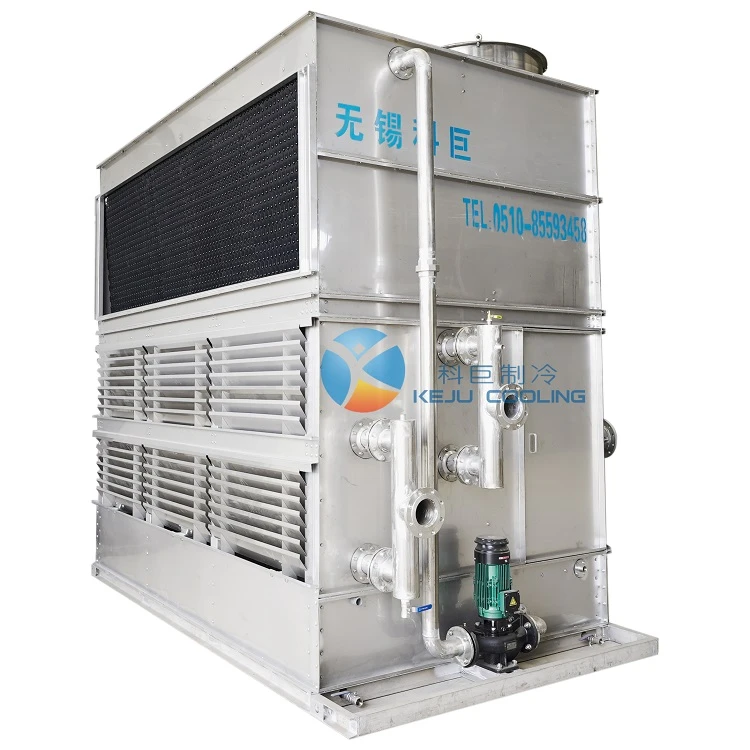
Before delving into the performance - improvement strategies, it's essential to understand the basic working principle of a Cross Flow Closed Loop Cooling Tower. In a cross flow closed loop cooling tower, hot water from the process is circulated through a closed - loop piping system. At the same time, ambient air is drawn through the cooling tower in a direction perpendicular to the flow of the water in the heat exchanger. The water in the closed loop transfers heat to the external water that is being sprayed over the heat exchanger surfaces, and this external water then evaporates, taking the heat away with it.
Challenges in Hot and Humid Climates
In hot and humid climates, the efficiency of a cross flow closed loop cooling tower is significantly affected. High humidity levels reduce the evaporation rate of the cooling water because the air is already saturated with moisture. This means that less heat can be removed through evaporation, which is the primary heat - transfer mechanism in these cooling towers. Additionally, high ambient temperatures increase the temperature difference that the cooling tower needs to overcome to cool the hot water effectively, putting more stress on the system and reducing its overall performance.
Strategies to Improve Performance
1. Optimize Water Distribution
Proper water distribution is crucial for the efficient operation of a cross flow closed loop cooling tower. In hot and humid climates, uneven water distribution can lead to dry spots on the heat exchanger surfaces, reducing the heat - transfer efficiency. To optimize water distribution, ensure that the water nozzles are clean and properly aligned. Regularly inspect and clean the nozzles to prevent clogging, which can disrupt the uniform flow of water over the heat exchanger. Additionally, consider using advanced water - distribution systems that can provide more precise and uniform water coverage. This can help to maximize the contact area between the water and the air, enhancing the evaporation process even in high - humidity conditions.
2. Enhance Airflow
Good airflow is essential for the evaporation process in a cross flow closed loop cooling tower. In hot and humid environments, increasing the airflow can help to improve the cooling performance. One way to enhance airflow is to ensure that the air intake and outlet areas of the cooling tower are not blocked. Remove any debris, vegetation, or other obstructions that may impede the flow of air. Additionally, consider upgrading the fans in the cooling tower to more powerful and energy - efficient models. High - performance fans can increase the volume of air passing through the cooling tower, promoting better evaporation and heat transfer.
3. Use High - Efficiency Heat Exchangers
The heat exchanger is a critical component of a cross flow closed loop cooling tower. In hot and humid climates, using high - efficiency heat exchangers can significantly improve the cooling performance. High - efficiency heat exchangers have a larger surface area and better heat - transfer coefficients, allowing for more effective heat transfer between the hot water in the closed loop and the cooling water. They can also operate more efficiently at higher temperatures and humidity levels. When selecting a heat exchanger, look for models that are designed specifically for use in hot and humid environments and that have been tested and proven to provide superior performance.
4. Control Water Quality
Water quality can have a significant impact on the performance of a cross flow closed loop cooling tower. In hot and humid climates, the water in the cooling tower is more prone to the growth of algae, bacteria, and scale deposits. These can reduce the heat - transfer efficiency and cause damage to the cooling tower components. To control water quality, implement a comprehensive water - treatment program. This may include the use of chemicals to prevent the growth of microorganisms, remove scale, and control corrosion. Regularly monitor the water quality and adjust the treatment program as needed to ensure that the water in the cooling tower remains clean and free of contaminants.
5. Implement Smart Control Systems
Smart control systems can play a vital role in improving the performance of a cross flow closed loop cooling tower in hot and humid climates. These systems can monitor and adjust the operating parameters of the cooling tower in real - time based on the ambient temperature, humidity, and other factors. For example, they can automatically adjust the fan speed, water flow rate, and chemical dosage to optimize the cooling performance and energy efficiency. By using smart control systems, you can ensure that the cooling tower operates at its maximum efficiency under all weather conditions, reducing energy consumption and operating costs.

Case Studies
Let's look at some real - world examples of how these strategies have been successfully implemented to improve the performance of cross flow closed loop cooling towers in hot and humid climates.
One of our clients, a manufacturing plant located in a tropical region, was experiencing significant performance issues with their cross flow closed loop cooling tower. The cooling tower was struggling to maintain the desired water temperature due to the high humidity and ambient temperatures. After a thorough assessment, we recommended a series of improvements. First, we optimized the water - distribution system by replacing the clogged nozzles and installing a new water - distribution manifold. This ensured a more uniform flow of water over the heat exchanger surfaces. Second, we upgraded the fans to more powerful models, which increased the airflow through the cooling tower. Third, we installed a high - efficiency heat exchanger, which improved the heat - transfer efficiency. Finally, we implemented a comprehensive water - treatment program and a smart control system. As a result, the cooling tower's performance improved significantly. The water temperature was reduced to the desired level, and the energy consumption was also reduced by 20%.
Conclusion
Improving the performance of a cross flow closed loop cooling tower in hot and humid climates requires a comprehensive approach that addresses all aspects of the system's operation. By optimizing water distribution, enhancing airflow, using high - efficiency heat exchangers, controlling water quality, and implementing smart control systems, you can significantly improve the cooling performance and energy efficiency of your cooling tower.
If you're facing challenges with the performance of your Cross Flow Closed Cooling Tower or Cross Flow Closed Circuit Cooling Tower in a hot and humid climate, we're here to help. Our team of experts has extensive experience in designing, installing, and optimizing cross flow closed loop cooling towers. We can provide you with customized solutions to meet your specific needs and improve the performance of your cooling system. Contact us today to discuss your requirements and explore how we can help you achieve better cooling performance and energy savings.